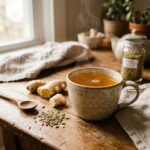
The first time I heard about the Sanjay Gupta chai tea recipe, I was sitting at my kitchen table at 6 a.m., desperately trying to cut back on my third cup of coffee before noon. My neighbor had mentioned it almost offhand — “You know, that CNN doctor talks about his chai like it’s medicine.” I figured it was worth a try. That was three years ago, and I haven’t looked back since.

What you’re getting here is my tested, home-kitchen version of this spiced chai — built around the same anti-inflammatory principles Dr. Gupta has discussed publicly, and adjusted through about a dozen batches until it tasted exactly right. Real spices, real milk, no shortcuts.
Table of Contents
Why This Chai Recipe Actually Works
The Ingredient That Makes the Difference
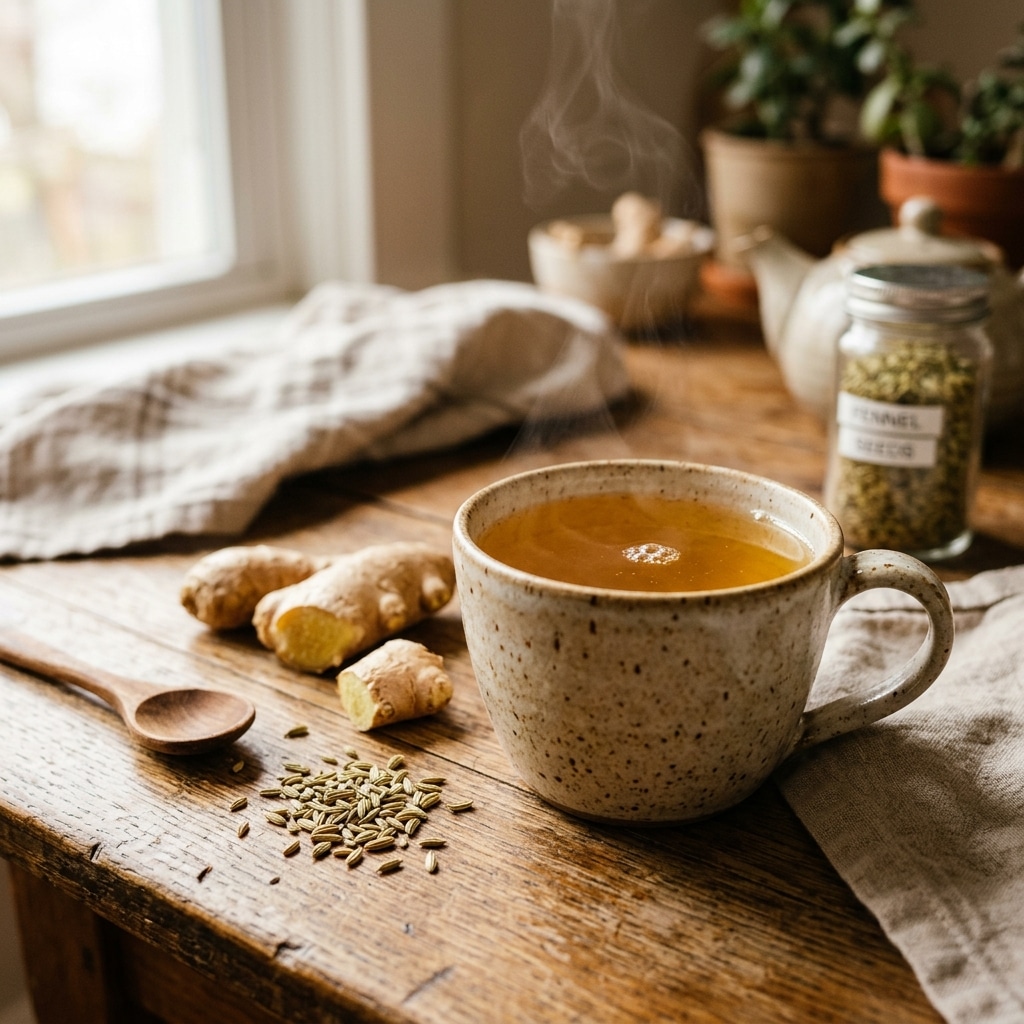
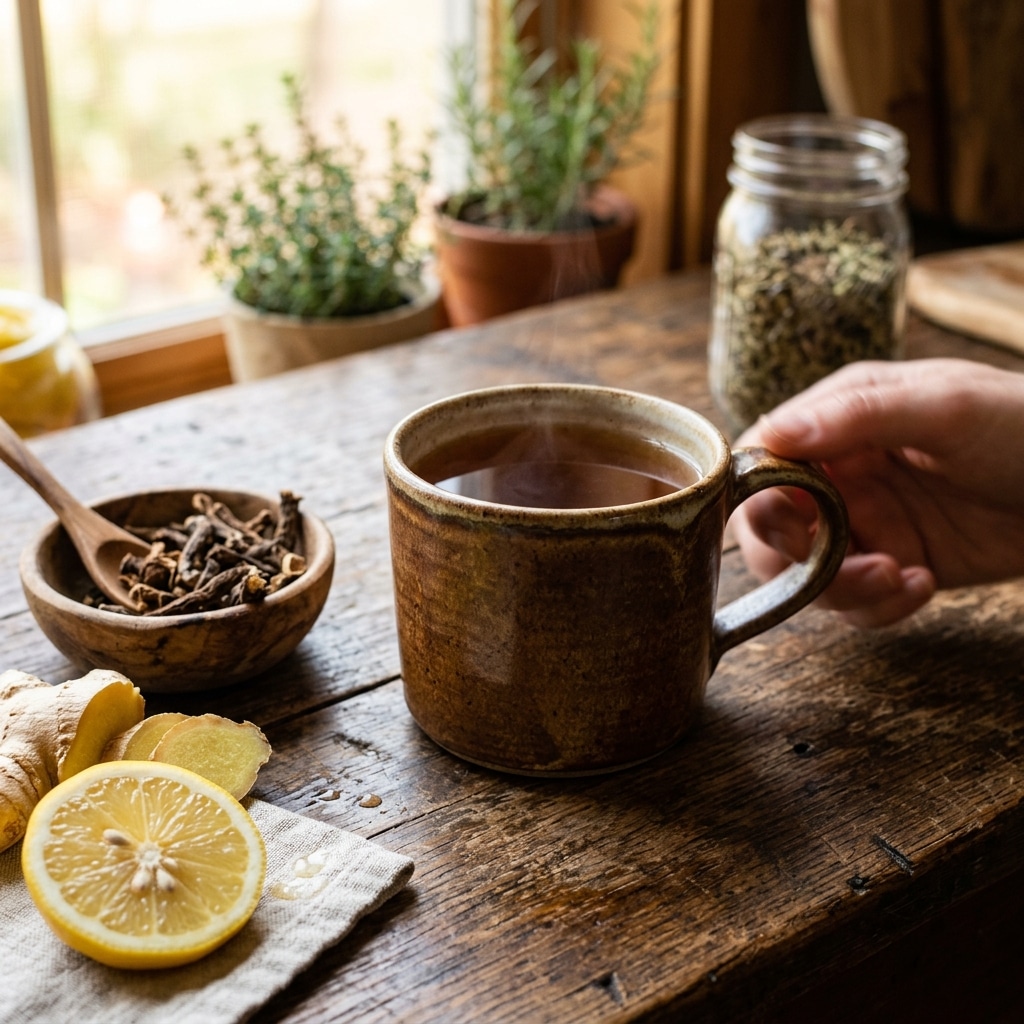
Most store-bought chai blends lean heavy on cinnamon and call it a day. What sets this version apart is fresh ginger root — not powder, not paste, but a thumb-sized knob grated right before it goes into the pot. The first time I used fresh ginger instead of the jarred stuff, the difference was immediate. There’s a brightness to it, almost a little heat at the back of your throat, that dried ginger simply can’t replicate.
The other hero ingredient is whole black peppercorns. I know that sounds odd in a tea, but even just four or five cracked peppercorns added during the simmer amplify the way your body absorbs the curcumin from turmeric — and that connection is backed by actual food science research from nutritional biochemistry. Just trust me on this one: don’t skip it.
The Technique Most People Get Wrong
Here’s what I used to do wrong for an embarrassingly long time — I’d dump everything in boiling water at once and wonder why the spices tasted flat and one-dimensional. The real technique is to bloom the spices first. Add your whole spices to a dry pot over medium heat for about 60 seconds before any liquid touches them. You’ll hear them pop slightly and smell them open up. That step alone changed everything about this recipe for me.
If you’re already a fan of warming drinks for wellness, you might appreciate how I approach my lemon ginger tea for immune support using the same blooming principle — it works across the board.
Print
Sanjay Gupta Chai Tea Recipe That Actually Warms You From the Inside Out
- Total Time: 17 minutes
- Yield: 2 mugs 1x
- Diet: Vegetarian
Description
A warming homemade chai tea inspired by Dr. Sanjay Gupta — made with fresh ginger, turmeric, cardamom, cinnamon, and black tea. A healthy, delicious swap for your morning coffee.
Ingredients
2 cups water
1 cup whole milk
2 tsp loose black tea or 2 tea bags
1-inch piece fresh ginger, grated
1 cinnamon stick
4 green cardamom pods, lightly crushed
4–5 whole black peppercorns, cracked
1/4 tsp ground turmeric
1 tbsp honey or maple syrup
1 star anise (optional)
Instructions
1. Dry toast cinnamon, cardamom, peppercorns, and star anise in a dry saucepan over medium heat for 60 seconds.
2. Add 2 cups cold water, grated ginger, and turmeric. Bring to a boil, then simmer 5 minutes.
3. Add black tea and simmer 2 more minutes. Remove tea.
4. Add milk and heat on medium for 3 minutes, stirring. Do not boil.
5. Strain into mugs. Add honey after pouring. Serve hot.
Notes
Use oat milk for a dairy-free version.
Make the spiced water base ahead and refrigerate up to 4 days.
For a caffeine-free version, substitute rooibos tea.
Add honey after straining — not during cooking — to preserve its flavor.
- Prep Time: 5 minutes
- Cook Time: 12 minutes
- Category: Beverage
- Method: Stovetop
- Cuisine: Indian-American
Nutrition
- Serving Size: 1 mug
- Calories: 120
- Sugar: 14g
- Sodium: 55mg
- Fat: 4g
- Saturated Fat: 2.5g
- Unsaturated Fat: 1.5g
- Trans Fat: 0g
- Carbohydrates: 16g
- Fiber: 0.5g
- Protein: 4g
- Cholesterol: 12mg
Ingredients & Preparation
Full Ingredient List with Substitution Notes
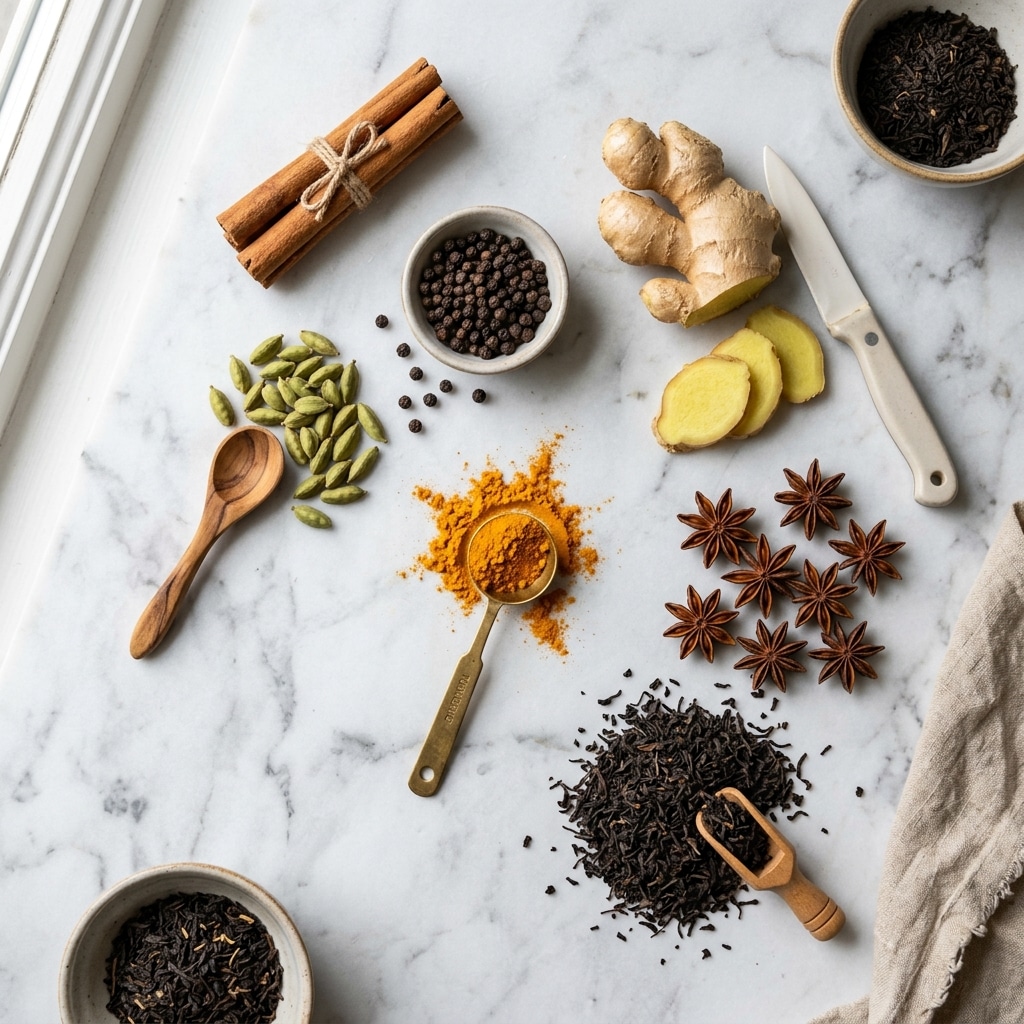
Here’s what you need for two generous mugs. This is the version I’ve settled on after testing several variations:
- 2 cups water
- 1 cup whole milk (sub oat milk for dairy-free — it gives the creamiest result of all the non-dairy options I’ve tried)
- 2 teaspoons loose black tea or 2 black tea bags (Assam works best; Darjeeling is lighter if you want less caffeine)
- 1-inch piece of fresh ginger, grated or thinly sliced
- 1 cinnamon stick (not ground — the stick gives a gentler, less bitter flavor)
- 4 green cardamom pods, lightly crushed
- 4–5 whole black peppercorns, cracked
- ¼ teaspoon ground turmeric
- 1 tablespoon honey or maple syrup to sweeten (add after pouring, not during cooking)
- Optional: 1 star anise for a subtle licorice note
One thing I’ll note: if you’re watching your sugar intake, skip the honey entirely and let the cardamom and cinnamon do the sweetening work naturally. It’s more than enough.
Step-by-Step Preparation Before Cooking
Grate your ginger first and set it aside — once it’s grated it starts losing its volatile oils quickly, so you want it ready to go immediately. Lightly crack your cardamom pods with the flat side of a knife just enough to split them open. Crack your peppercorns the same way. Have your cinnamon stick, turmeric, and tea measured and within arm’s reach. The whole cooking process moves fast once you start, so having everything prepped makes it smooth.
| Ingredient | Standard Version | Lighter Version |
|---|---|---|
| Milk | 1 cup whole milk | 1 cup unsweetened oat milk |
| Sweetener | 1 tbsp honey | ½ tsp stevia or skip entirely |
| Tea Base | Assam black tea | Decaf black tea or rooibos |
| Calories (approx.) | ~120 per serving | ~55 per serving |
Cooking Instructions
The Cooking Process Step by Step
Step 1: Place a small saucepan over medium heat. Add your cinnamon stick, cracked cardamom pods, cracked peppercorns, and star anise if using. Dry toast for 60 seconds, stirring constantly, until fragrant.
Step 2: Pour in 2 cups of cold water. Add the grated ginger and turmeric. Bring everything to a gentle boil, then reduce to a simmer for 5 minutes. Your kitchen will smell incredible at this point — that’s how you know it’s working.
Step 3: Add the black tea. Simmer for exactly 2 more minutes — no longer, or the tannins make it bitter. I learned that the hard way during an early batch that tasted more like bark than tea.
Step 4: Pour in the milk. Bring back to a near-simmer over medium heat, watching carefully so it doesn’t boil over. Let it go for 3 minutes, stirring occasionally.
Step 5: Strain through a fine mesh strainer into your mugs. Add honey or maple syrup now, not before. Serve immediately.
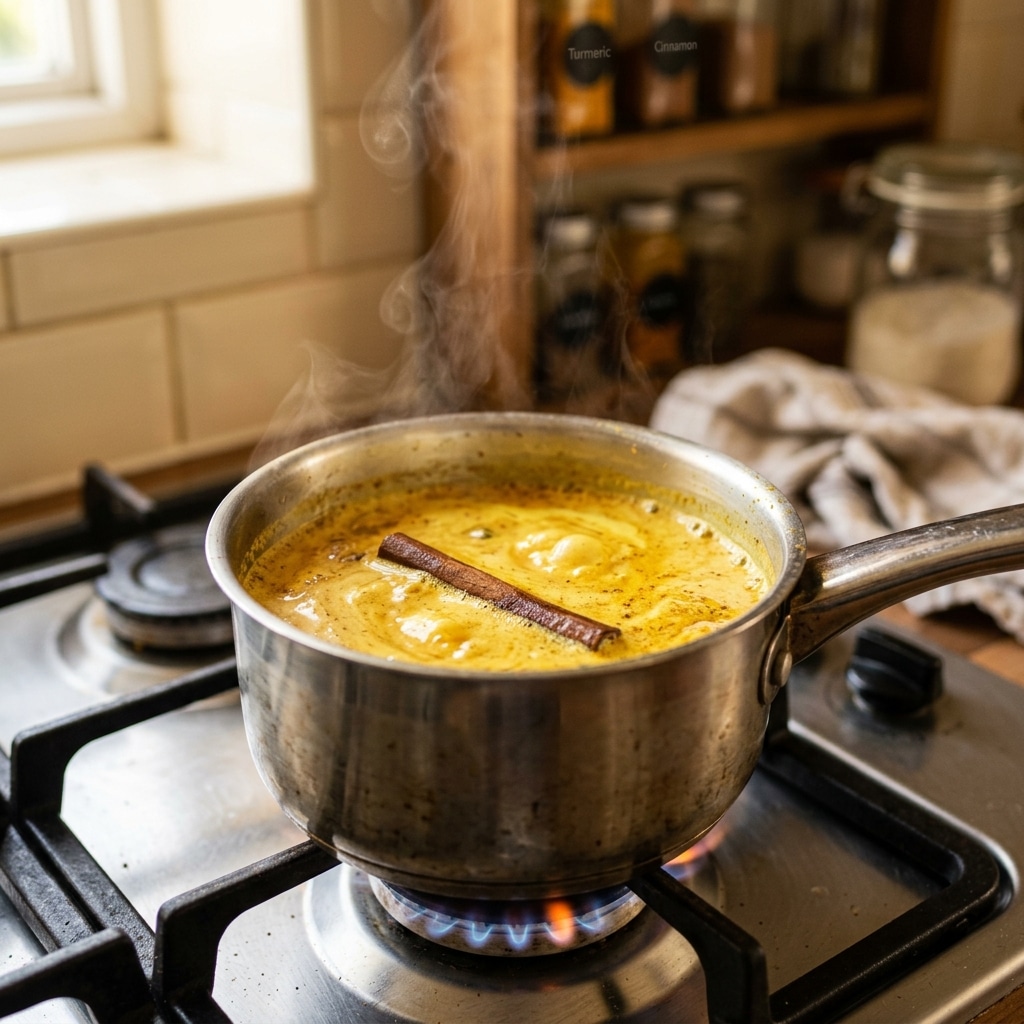
How to Know When It’s Done Perfectly
The color is your best indicator — a finished batch should be a deep amber-gold, not pale yellow and not muddy brown. Give it a stir after straining; the liquid should look slightly silky from the milk fat emulsifying with the spiced water.
Taste before you sweeten. After testing this more times than I can count, I find that the spice balance is right when you get ginger warmth first, then a slight cinnamon sweetness, then that gentle peppery finish at the back. If one spice is dominating, it usually means the simmer went too long on the water step. The cinnamon weight loss tea on my site uses a similar layered spice balance — same principles apply.
Serving, Storage & Variations
How to Serve It and What to Pair It With
Pour into a wide mug — the wider mouth lets the aroma hit you first, and with chai, that’s half the experience. I usually add my honey while the tea is still steaming so it dissolves instantly. For a frothy top without any special equipment, pour the strained chai back and forth between your mug and the saucepan from about 12 inches up two or three times. It creates a natural foam.
This chai pairs beautifully with something slightly sweet and plain — a piece of buttered toast, a shortbread cookie, or just a banana. For a more indulgent variation inspired by one of my favorites, take a look at this vanilla cinnamon milk tea that works off some of the same spice logic with a dessert-style twist.
Storage Tips and Variations Worth Trying
You can make the spiced water base — everything before the milk and tea — in a large batch and refrigerate it for up to 4 days. Just reheat a portion, add tea, then milk, and you’re done in under 5 minutes on a weekday morning. That little prep trick genuinely changed how consistently I make this.
For a cold brew version, skip the heat entirely. Add all your spices and grated ginger to cold water with tea bags, refrigerate overnight, then strain and add cold milk with ice. It’s completely different and just as good in summer. For a caffeine-free version, rooibos tea swaps in without changing the spice profile at all — it’s actually what I make for my kids.
The USDA’s nutritional database is worth bookmarking if you want to track the specific micronutrients from spices like turmeric and ginger as you adjust your version.
Frequently Asked Questions
Is chai tea healthy for immune support?
Ginger and turmeric both have well-documented anti-inflammatory properties, and cardamom contains antioxidants that some studies link to immune function. No single food is a cure-all, but as a daily warm drink with real spices, it’s a genuinely smart choice. The key is using whole spices rather than flavored syrups, which are mostly sugar.
When should you not drink chai tea?
Late evening is the obvious one — the caffeine in black tea can disrupt sleep even in smaller amounts. If you’re on blood-thinning medication, talk to your doctor first because cinnamon in large amounts can have mild anticoagulant effects. People with acid reflux sometimes find black tea irritating, especially on an empty stomach.
Why do many people replace coffee with chai?
Chai gives you a real caffeine lift — roughly 50mg per cup versus 95mg for drip coffee — but the L-theanine in black tea smooths out the spike and crash. The warming spices, especially ginger and cinnamon, also create a physical sense of alertness that feels gentler on your stomach than coffee acids. A lot of people find the ritual itself part of the appeal.
How to adjust the nutrition based on your preferences?
Swap whole milk for oat or almond milk to cut calories significantly — oat milk lands around 35 calories per cup versus 150 for whole milk. Use stevia or skip sweetener entirely to eliminate added sugar. For a lower-carb version, coconut milk adds creaminess with fewer net carbs than oat milk. The spices themselves add almost no calories.
Make It Yours, One Cup at a Time
The Sanjay Gupta chai tea recipe resonates with me because it’s not about following a trend — it’s about drinking something real that your body actually responds to. I’ve made this on cold Tuesday mornings when nothing else sounded good, and I’ve made it for friends who showed up needing something comforting. It works every time.
Try it once with whole milk, then experiment from there. Leave a comment below and tell me which spice variation you end up loving — I read every single one.