My neighbor Diane showed up at my door one October afternoon with a problem. Her daughter had just been diagnosed with both a gluten intolerance and an egg allergy, and her birthday was in three days. “Can you help me figure this out, Jess?” I’d honestly never baked a gluten free chocolate cake recipe without eggs before that moment. I spent the next two days testing batches, burning one, under-mixing another, and finally landing on something so good that Diane’s daughter asked for it again at Christmas. What I’m sharing here is that exact recipe — the one that actually works — plus every trick I learned making it six times before I got it right.
Table of Contents
Why This Recipe Works When Others Don’t
The Ingredient That Makes the Difference
The ingredient most eggless, gluten-free chocolate cakes skip is aquafaba — the liquid from a can of chickpeas. I know, I know. It sounds like something a food scientist invented in a lab, but it’s been sitting in your pantry this whole time. Two tablespoons of aquafaba replaces one egg, and it does something no flax egg or chia egg can quite pull off: it adds structure and a little lift. The first time I used it, I was skeptical enough that I almost threw it away. Don’t.
The other thing that changes everything is Dutch-process cocoa. It’s less acidic than natural cocoa, which matters here because without eggs to bind the batter, you can’t afford any ingredient fighting another. Dutch-process gives you that deep, almost brownie-like chocolate flavor. I use it every single time now — in this recipe and whenever I make a chocolate strawberry cake that needs that same rich color.
The Technique Most People Get Wrong
Overmixing. That’s it. That’s the mistake I made on batch two, and I ended up with a dense, slightly gummy cake that sank in the middle as it cooled. Without gluten and eggs both working together, you have very little structural margin for error.
Mix your dry ingredients separately first, then fold the wet into the dry until just combined — ten to twelve folds, no more. Some dry streaks are fine. They’ll hydrate in the oven. If the batter looks a little lumpy, good. That’s exactly what you want.
Ingredients & Preparation
Full Ingredient List with Notes on Substitutions
Dry Ingredients:
- 1½ cups (180g) gluten-free all-purpose flour blend (I use Bob’s Red Mill 1-to-1 — it already contains xanthan gum, which is non-negotiable here)
- ¾ cup (65g) Dutch-process cocoa powder
- 1½ cups (300g) granulated sugar
- 1½ tsp baking soda
- 1 tsp baking powder
- ½ tsp fine sea salt
Wet Ingredients:
- ¾ cup (180ml) unsweetened oat milk (or any non-dairy milk — full-fat coconut milk makes it richer)
- ¾ cup (180ml) strong brewed coffee, cooled (enhances chocolate flavor; sub hot water if needed)
- ½ cup (120ml) aquafaba (liquid from one 15oz can of unsalted chickpeas)
- ½ cup (120ml) neutral oil (avocado or sunflower — not olive)
- 2 tsp apple cider vinegar
- 2 tsp pure vanilla extract
For the Frosting:
- 1 cup (170g) dairy-free dark chocolate chips
- ½ cup (120ml) full-fat coconut cream
- Pinch of salt
Substitution note: If you can’t find aquafaba, you can use ¼ cup unsweetened applesauce + 1 tbsp ground flaxseed mixed with 2 tbsp warm water. It works, but the texture is slightly denser. I’ve tested it both ways.
| Egg Substitute | Amount per Egg | Best For | Texture Result |
|---|---|---|---|
| Aquafaba | 3 tbsp | Binding + lift | Light, springy |
| Flax egg | 1 tbsp flax + 3 tbsp water | Binding only | Dense, chewy |
| Applesauce | ¼ cup | Moisture + binding | Moist, slightly dense |
| Mashed banana | ¼ cup | Moisture | Moist, adds banana flavor |
Step-by-Step Preparation Before Cooking
Preheat your oven to 350°F (175°C). Grease two 8-inch round cake pans and line the bottoms with parchment paper — don’t skip the parchment. Gluten-free cakes stick more than regular ones, and you will not forgive yourself.
Whisk together all dry ingredients in a large bowl. In a separate bowl or large measuring cup, combine all wet ingredients and stir until the oil is incorporated — it won’t fully emulsify, and that’s fine. Let the mixture sit for two minutes so the vinegar can react with the baking soda. You’ll see it get slightly foamy, which tells you it’s working.
Cooking Instructions
The Cooking Process Step by Step
Pour the wet ingredients into the dry and fold gently. I use a wide spatula and a circular scraping motion rather than stirring in circles, which tends to overdevelop what little structure exists. Again — stop when you no longer see large dry pockets. Small lumps are not a problem.
Divide the batter evenly between both pans. It’ll look thinner than a traditional cake batter. That’s normal — this is correct. Tap each pan firmly on the counter three times to release air bubbles, then slide them into the center rack. Bake for 30 to 35 minutes.
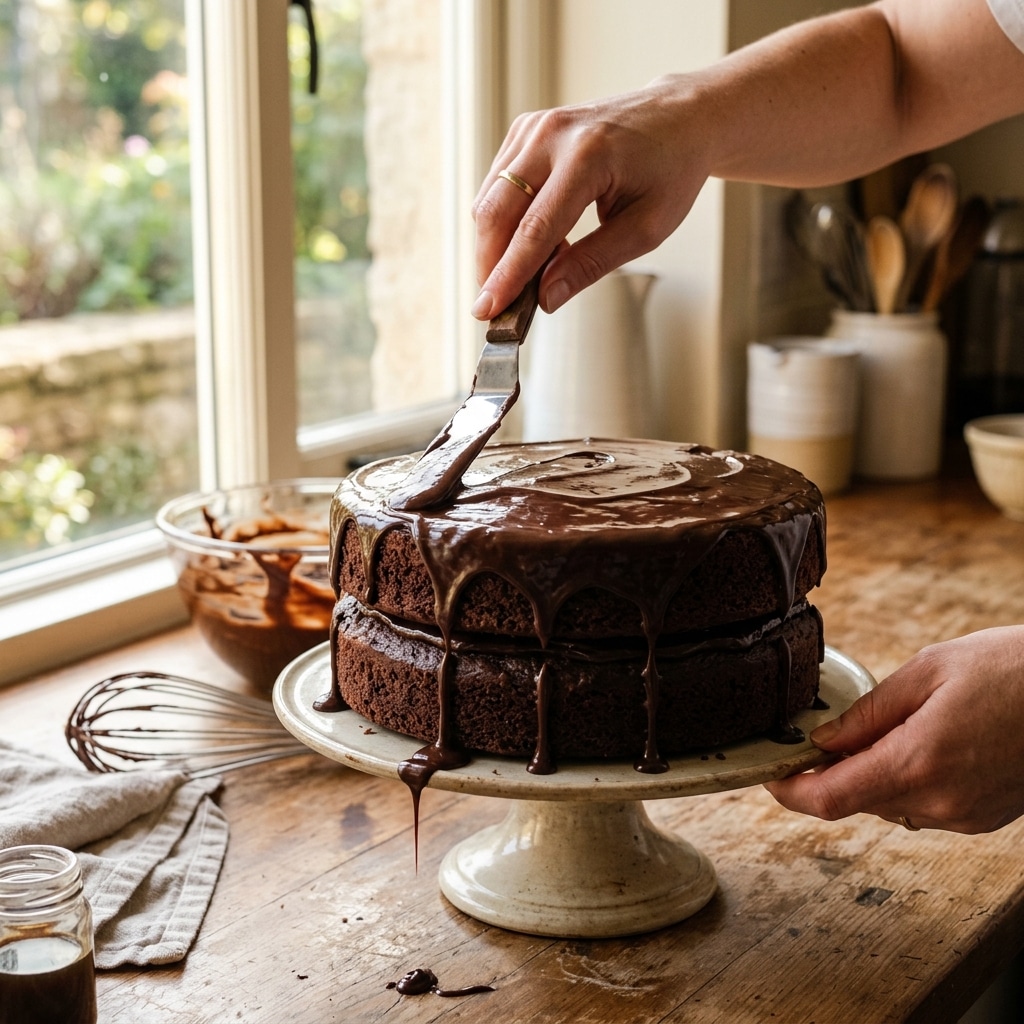
While the cakes bake, make the ganache frosting. Heat coconut cream in a small saucepan over medium heat until it just begins to simmer — don’t boil it. Pour over the chocolate chips in a heatproof bowl, add the pinch of salt, and let it sit untouched for four minutes. Then whisk from the center out until silky. Let it cool at room temperature for at least 45 minutes before frosting. If it firms up too much, set the bowl over warm water and stir gently. I learned that tip the hard way when I rushed it one Christmas and ended up with something the consistency of fudge on top of my cake — still delicious, very ugly.
I also love knowing that according to the USDA FoodData Central database, dark chocolate carries a meaningful amount of iron and magnesium — so yes, this cake counts as nourishment. I’m choosing to believe that.
How to Know When It’s Done Perfectly
At 30 minutes, insert a toothpick into the center of each layer. It should come out with a few moist crumbs — not wet batter, not bone dry. The edges will be pulling slightly away from the pan sides. If the center still jiggles when you gently shake the pan, give it another three minutes.
Let both layers cool in the pans for 15 minutes, then turn them out onto a wire rack. Do not rush this. Gluten-free cakes are fragile when warm, and I’ve cracked more than one by trying to flip too early. Cool completely — a full hour minimum — before frosting. If you enjoy banana-forward baked goods, you might also like how I handle structure in this quick carrot cake banana bread — same patience required.
Print
Gluten Free Chocolate Cake Recipe Without Eggs — Fudgy, Foolproof & Dairy-Free Option Too
- Total Time: 55 minutes
- Yield: 12 slices 1x
Description
A rich, fudgy gluten-free chocolate cake made without eggs using aquafaba and Dutch-process cocoa. Dairy-free, tested six times, and genuinely foolproof.
Ingredients
1½ cups gluten-free all-purpose flour blend
¾ cup Dutch-process cocoa powder
1½ cups granulated sugar
1½ tsp baking soda
1 tsp baking powder
½ tsp fine sea salt
¾ cup unsweetened oat milk
¾ cup strong brewed coffee, cooled
½ cup aquafaba
½ cup neutral oil
2 tsp apple cider vinegar
2 tsp pure vanilla extract
1 cup dairy-free dark chocolate chips
½ cup full-fat coconut cream
Pinch of salt
Instructions
1. Preheat oven to 350°F. Grease two 8-inch round pans and line with parchment.
2. Whisk all dry ingredients together in a large bowl.
3. Combine all wet ingredients in a separate bowl. Let sit 2 minutes.
4. Fold wet into dry until just combined — 10 to 12 folds only.
5. Divide batter between pans. Tap pans to release air bubbles.
6. Bake 30–35 minutes until toothpick comes out with moist crumbs.
7. Cool in pans 15 minutes, then turn out and cool completely — at least 1 hour.
8. Make ganache: heat coconut cream to simmer, pour over chocolate chips and salt, rest 4 minutes, whisk smooth, cool 45 minutes.
9. Frost cooled layers and serve.
Notes
Do not overmix — fold gently until just combined.
Aquafaba from unsalted chickpeas works best.
Dutch-process cocoa is strongly preferred over natural cocoa here.
Cool cake completely before frosting or ganache will slide.
Freezes well unfrosted for up to 2 months.
- Prep Time: 20 minutes
- Cook Time: 35 minutes
- Category: Dessert
- Method: Baking
- Cuisine: American
Nutrition
- Serving Size: 1 slice
- Calories: 340
- Sugar: 32g
- Sodium: 280mg
- Fat: 16g
- Saturated Fat: 6g
- Unsaturated Fat: 9g
- Trans Fat: 0g
- Carbohydrates: 48g
- Fiber: 3g
- Protein: 3g
- Cholesterol: 0mg
Serving, Storage & Variations
How to Serve It and What to Pair It With
Place the first layer on your cake stand and spread about one-third of the ganache across the top — don’t push it to the very edge because the weight of the second layer will spread it for you. Set the second layer on top, press gently, and frost the top and sides with the remaining ganache. I do a rustic swipe pattern with an offset spatula because it hides imperfections and looks intentional.
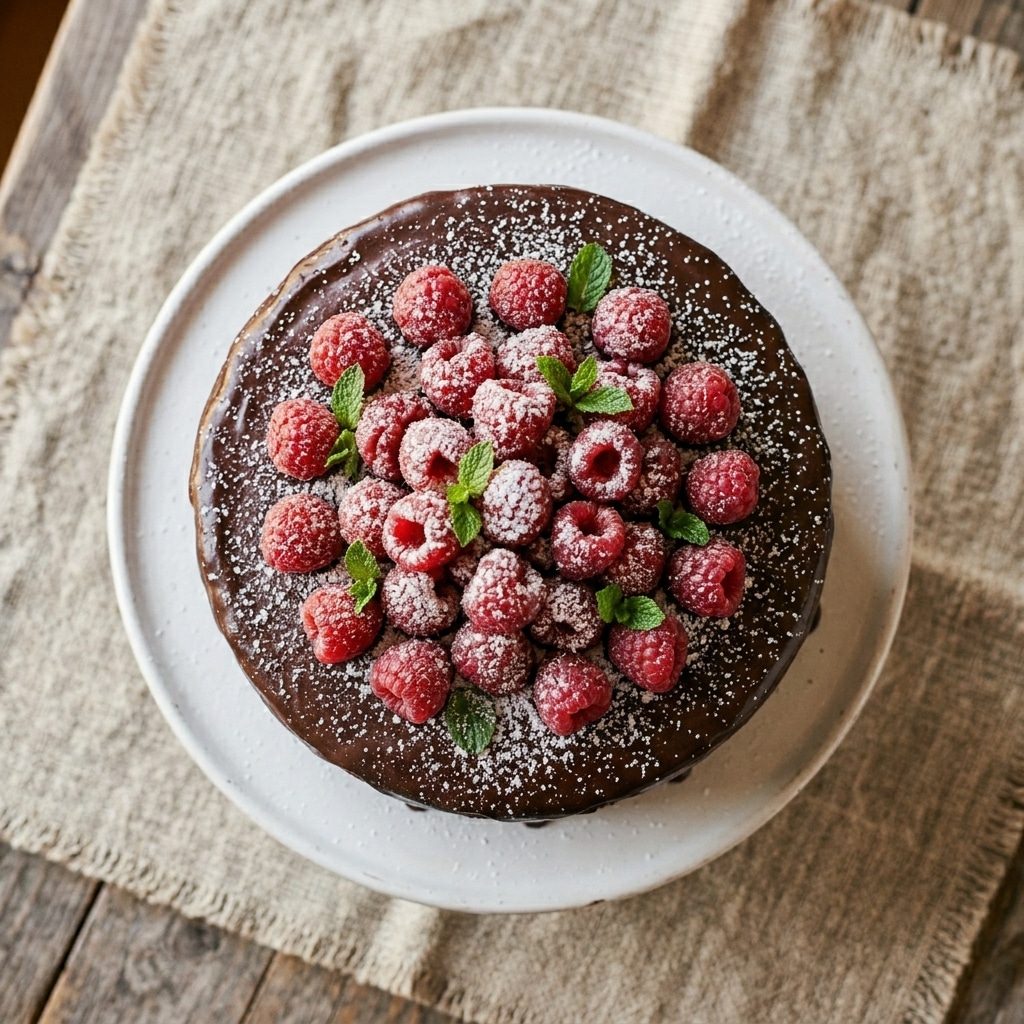
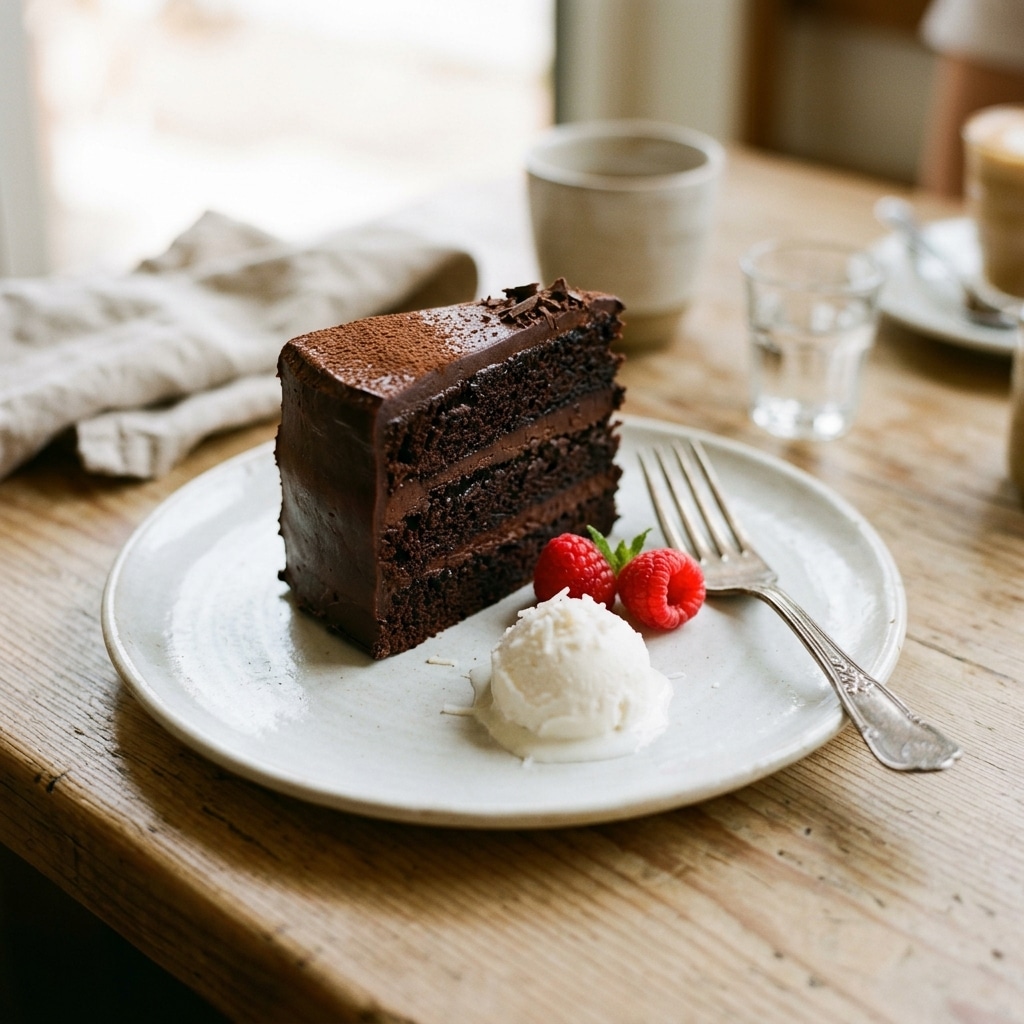
Fresh raspberries on top are my favorite finish. The tartness cuts through the richness in a way that feels intentional rather than decorative. A small scoop of coconut milk ice cream alongside is genuinely perfect. For a lighter standalone dessert option, I sometimes look to something like this fruit and ricotta cake for contrast on the same table — it balances the richness nicely at gatherings.
Topical Cluster Notes
Three related articles that would strengthen topical authority for this recipe:
“Best Gluten-Free Flour Blends for Baking: What Actually Works in Cakes” — Readers landing on this recipe will want to know whether their specific flour blend will work. A dedicated comparison of xanthan-gum-included vs. not-included blends for cake baking would capture high commercial-intent searches and support this article directly.
“How to Make Aquafaba at Home (And Every Way to Use It in Baking)” — Aquafaba is the star ingredient in this recipe, but many home cooks have never heard of it. A dedicated guide covering what it is, how to make it from scratch, and its full range of baking applications would build authority around the ingredient and create a natural internal link target.
“Egg-Free Baking: Complete Guide to Every Substitute and When to Use Each” — This directly addresses the search intent behind all four FAQ questions in this article. A comprehensive comparison of egg substitutes (aquafaba, flax, chia, applesauce, banana, commercial replacers) tested across different baked goods would rank for high-volume informational queries and funnel readers directly to recipes like this one.
Storage Tips and Variations Worth Trying
Store the frosted cake covered at room temperature for up to two days, or refrigerate for up to five days. Bring refrigerated slices back to room temperature for 20 minutes before eating — cold ganache gets firm and the cake compresses in the fridge. For freezing, wrap individual unfrosted slices tightly in plastic wrap then foil. They keep for up to two months and thaw beautifully on the counter overnight.
Variations I’ve actually tested:
- Mocha version: Replace the oat milk with cold brew concentrate. Richer, more complex. Adults only.
- Spiced version: Add 1 tsp cinnamon and ¼ tsp cayenne to the dry ingredients. My husband says this is his favorite version of anything I’ve ever baked.
- Sheet cake version: Pour all batter into a greased 9×13 pan and bake at 350°F for 35-40 minutes. Easier to transport for parties.
- Cupcakes: Fill liners two-thirds full and bake at 350°F for 20-22 minutes. Makes about 18.
Frequently Asked Questions
What can I use to bake a cake if I don’t have eggs?
Check your pantry first. A can of chickpeas gives you aquafaba. Ripe bananas work. Ground flaxseed mixed with water gels up in minutes. Even a tablespoon of plain nut butter per egg adds enough fat and binding to make a decent cake. You’ve almost certainly got at least one of these options already.
What can I use instead of eggs for a chocolate cake?
Your best options are aquafaba, flax eggs, chia eggs, unsweetened applesauce, or mashed ripe banana. For chocolate cake specifically, aquafaba is my preference because it’s flavor-neutral. Banana adds taste, applesauce can make the crumb gummy if overused, and flax or chia can leave tiny speckles in the finished slice.
Can I bake a chocolate cake without eggs?
Absolutely. The key is using a combination of leavening agents — baking soda plus an acid like apple cider vinegar — to create the rise eggs normally provide. Good fat content from oil, plus a moisture-rich liquid like oat milk or coffee, handles the texture. I’ve made this cake dozens of times without a single egg.
What can I substitute for eggs in a gluten-free cake mix?
Aquafaba is my top pick — use 3 tablespoons per egg. It adds binding and a little lift that other substitutes don’t. Flax eggs (1 tbsp ground flax + 3 tbsp water, rested 5 minutes) work too but produce a denser result. Applesauce at ¼ cup per egg adds moisture but weighs the batter down slightly.
Make This Cake Your Own
This gluten free chocolate cake recipe without eggs has become one of the most-requested things I make, and I genuinely never saw that coming. It started as a favor for a friend’s daughter and turned into something my whole family loves — including people who eat all the gluten and eggs they want. That’s the real test.
Make it once exactly as written. Then, once you know how the batter feels and how your oven runs, start playing with it. Add the cayenne. Try the mocha version. Make it into cupcakes for a school party where half the kids have food allergies. Drop a comment below and tell me which variation you tried first — I read every single one.