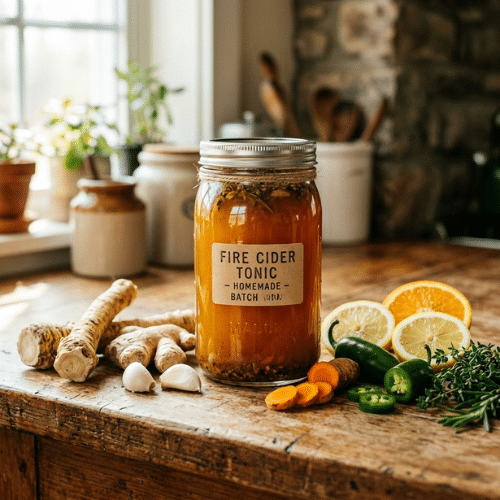
I still remember the first time my neighbor Linda pressed a small mason jar into my hands and said, “Trust me, just take a spoonful when you feel something coming on.” That was about twelve years ago, and I’ve been making my own fire cider recipe every single October since. It smells aggressive, it tastes like a punch in the face (in the best possible way), and honestly? It works better than anything I’ve found in a pharmacy aisle.
In this article, I’m giving you my exact recipe — the one I’ve tweaked over the years — plus every tip I’ve learned the hard way about steeping time, ingredient ratios, and what to do with it once it’s done.
Table of Contents
Why This Fire Cider Recipe Actually Works
The Ingredient That Makes the Difference
Most recipes call for the usual suspects: horseradish, ginger, garlic, onion, hot peppers. Those are non-negotiable. But the ingredient that took my batches from “fine” to “wow” was fresh turmeric root. I added it about four years ago after reading about its anti-inflammatory compounds, and the depth it adds — both in flavor and in color — is genuinely remarkable.
Raw horseradish is the backbone, though. If you can’t find it fresh, you’ll be disappointed. The pre-ground stuff just doesn’t hit the same way, and I say that after one very regrettable shortcut in 2019.
I also add a whole lemon (peel included) and a tablespoon of black peppercorns. The pepper isn’t just for heat — research suggests it significantly increases the absorption of curcumin, the active compound in turmeric. That’s a small thing that makes a real difference.
The Technique Most People Get Wrong
Here’s what nobody tells you: you have to shake the jar every single day. I mean it. The ingredients will settle and the infusion will be uneven if you leave it sitting on a shelf and forget about it.
The other mistake I see constantly is straining too early. Four weeks is the absolute minimum. I’ve tried it at two weeks and three weeks — both times it tasted sharp and thin. The full month lets the apple cider vinegar mellow out and pull every bit of flavor from the roots and aromatics. If you want ideas on how other functional tonics work with similar logic, my guide to lemon ginger tea for immune support covers some of the same principles in a much gentler daily drink.
Ingredients & Preparation
Full Ingredient List with Notes on Substitutions
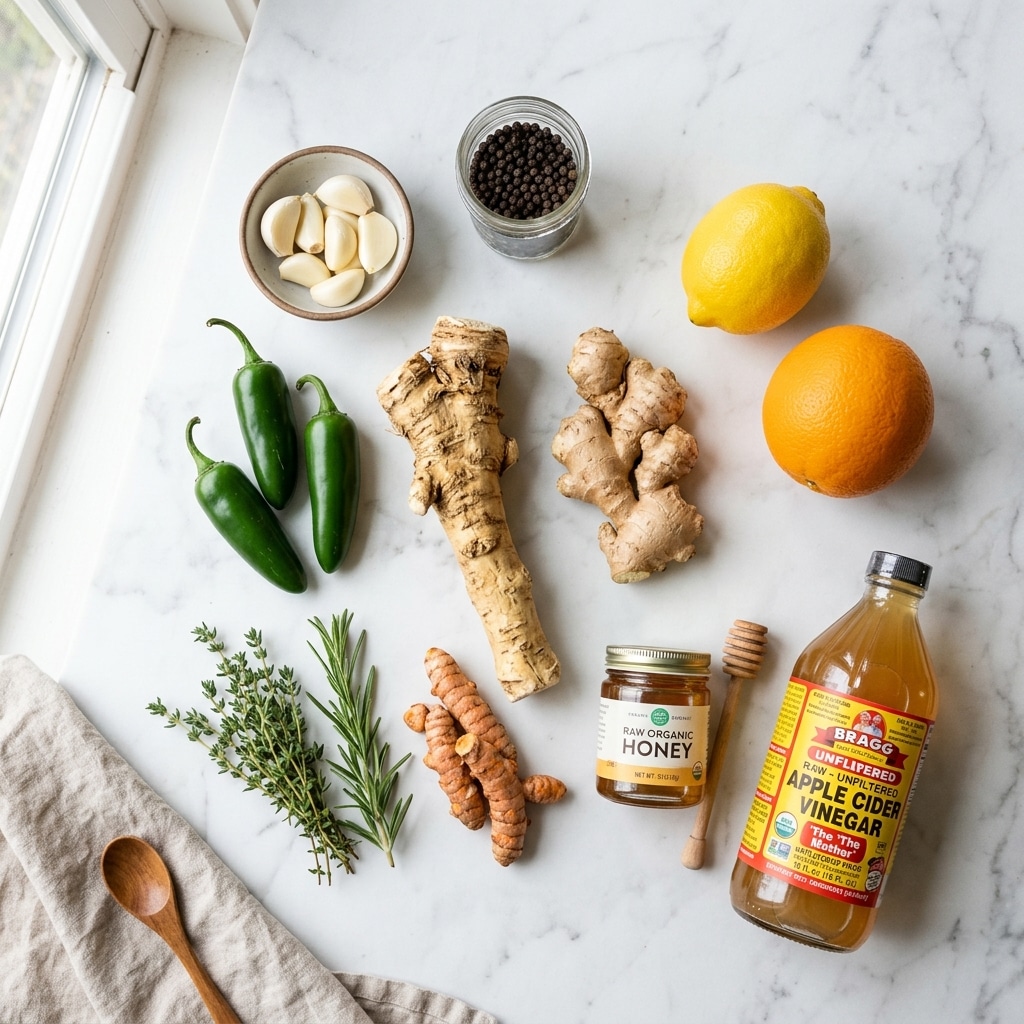
Here’s what goes into my standard quart-jar batch. This fills one 32-ounce mason jar snugly.
- ½ cup fresh horseradish root, peeled and grated — no substitute; this is the engine of the whole recipe
- ¼ cup fresh ginger root, peeled and roughly chopped
- 1 medium onion, roughly chopped — yellow or white both work
- 10 cloves garlic, smashed and roughly chopped
- 2 jalapeño peppers (or 1 habanero if you want real heat), sliced
- 1 small knob fresh turmeric root, grated — or 1 tsp ground turmeric in a pinch
- 1 lemon, quartered with peel on, seeds removed
- 1 orange, quartered with peel on, seeds removed
- 1 tablespoon black peppercorns
- 1 tablespoon raw honey (add after straining, not before)
- 2 cups raw, unfiltered apple cider vinegar — the kind with the mother; this is not the place for distilled white vinegar
If you can’t find fresh horseradish, some people use extra ginger and radish slices as a stand-in. I’ve tried it. It’s fine, but the fire is noticeably tamer.
| Ingredient | Fresh Version | Acceptable Substitute |
|---|---|---|
| Horseradish root | Strongly preferred | None (reduces potency significantly) |
| Ginger root | Best option | 1 tsp ground ginger per ¼ cup fresh |
| Turmeric root | Preferred | 1 tsp ground turmeric |
| Raw ACV | Required (with the mother) | No substitute recommended |
Step-by-Step Preparation Before Infusing
Wash everything thoroughly — turmeric especially will stain your cutting board and your hands, so I wear gloves for that part. Learned that the hard way on Thanksgiving prep one year.
Grate the horseradish and turmeric first, then roughly chop everything else. You want good surface area contact, not a smooth paste. Leave things chunky. Pack all the solid ingredients into a clean, dry quart-sized mason jar, pressing them down gently to distribute evenly.
Print
Fire Cider Recipe: The Immune-Boosting Tonic I Make Every Fall
- Total Time: 4 weeks
- Yield: 32 tablespoons (1 quart) 1x
Description
A homemade fire cider tonic made with fresh horseradish, ginger, garlic, turmeric, and raw apple cider vinegar. Infuses for four weeks for maximum potency. One tablespoon daily is all you need.
Ingredients
½ cup fresh horseradish root, peeled and grated
¼ cup fresh ginger root, peeled and roughly chopped
1 medium yellow onion, roughly chopped
10 cloves garlic, smashed and chopped
2 jalapeño peppers, sliced
1 small knob fresh turmeric root, grated
1 lemon, quartered with peel on, seeds removed
1 orange, quartered with peel on, seeds removed
1 tablespoon black peppercorns
1 tablespoon raw honey (added after straining)
2 cups raw unfiltered apple cider vinegar (with the mother)
Instructions
1. Peel and grate the horseradish and turmeric. Roughly chop ginger, onion, garlic, jalapeños, lemon, and orange. Keep everything chunky.
2. Pack all solid ingredients into a clean quart-sized mason jar, pressing down gently.
3. Pour raw apple cider vinegar over all ingredients until fully submerged. Place parchment between jar and metal lid if needed.
4. Seal and store in a cool, dark place. Shake once daily for four full weeks.
5. Strain through fine-mesh cheesecloth after four weeks, pressing all liquid from solids. Stir in raw honey at room temperature.
6. Transfer to a clean glass jar. Refrigerate and use within six months. Dose: 1 tablespoon daily.
Notes
Turmeric will stain — wear gloves when grating it.
Fresh horseradish is essential; ground versions reduce potency significantly.
For extra heat, substitute one jalapeño with a habanero or add dried cayenne.
For a sweeter batch, swap honey for maple syrup after straining.
Always use raw ACV with the mother — filtered vinegar will not give the same result.
- Prep Time: 20 minutes
- Cook Time: 0 minutes
- Category: Tonic / Wellness Drink
- Method: Infusion / No-Cook
- Cuisine: American
Nutrition
- Serving Size: 1 tablespoon
- Calories: 12
- Sugar: 1g
- Sodium: 2mg
- Fat: 0g
- Saturated Fat: 0g
- Unsaturated Fat: 0g
- Trans Fat: 0g
- Carbohydrates: 2g
- Fiber: 0.1g
- Protein: 0.2g
- Cholesterol: 0mg
Cooking Instructions
The Infusing Process Step by Step
Pour the raw apple cider vinegar over the packed ingredients until everything is fully submerged. If you’re using a metal lid, put a sheet of parchment or wax paper between the jar and the lid — the vinegar will corrode bare metal over time. I use wide-mouth mason jars with plastic lids, which makes this a non-issue.
Give the jar a good shake, then store it somewhere cool and dark. My kitchen cupboard, away from the stove, works perfectly. Shake it every day — I keep it next to my morning tea setup so I never forget. This is a no-cook recipe in the traditional sense; the “cooking” here is time and chemistry.
After four full weeks, set up a fine-mesh strainer over a bowl, line it with cheesecloth if you have it, and press every drop of liquid out of the solids. That part is oddly satisfying. Stir in the raw honey while the liquid is still at room temperature, then pour into a clean jar or bottle. If you’re curious about how other natural wellness-focused drinks balance similar ingredients, my natural Ozempic recipe takes a comparable approach with apple cider vinegar as a base.
How to Know When It’s Done Perfectly
The color should be a deep, golden amber — almost like strong iced tea with an orange tint from the turmeric. Give it a sniff: you want a sharp, vinegary heat with clear notes of ginger and horseradish underneath. If it smells flat or just acidic, it probably needed a few more days.
The taste test is the real tell. Take a small sip (just a small one — your eyes will water either way). It should be spicy, warming, and tart all at once, with a slow burn that settles in your chest. According to the USDA’s food safety guidelines, high-acid environments like this one are naturally self-preserving, which is part of what gives fire cider its impressive shelf life.
Serving, Storage & Variations
How to Serve It and What to Pair It With
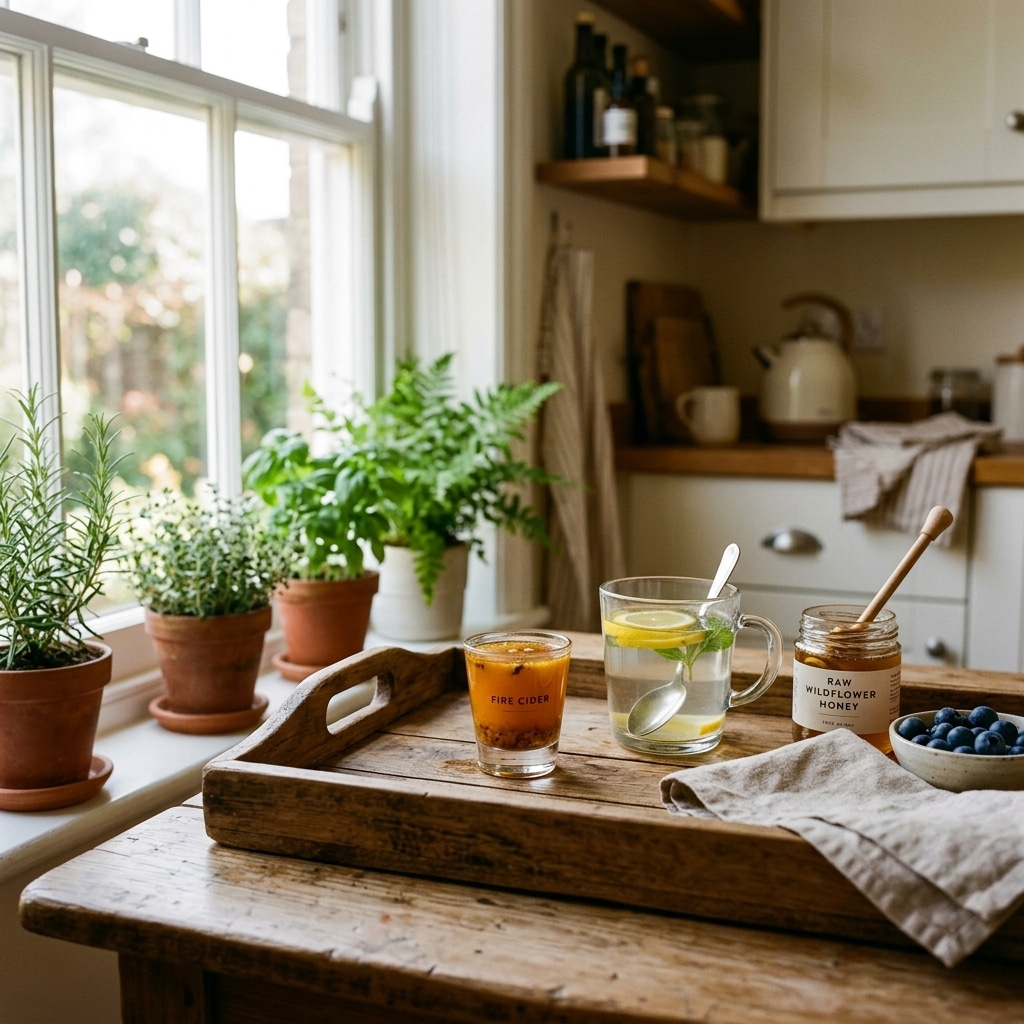
My standard daily dose is one tablespoon straight, first thing in the morning before coffee. Some people mix it into warm water with a little honey, which mellows the intensity considerably. I’ve also used it as a salad dressing base — just whisk it with olive oil and a pinch of salt and it’s genuinely delicious on bitter greens.
It makes a surprisingly good cocktail mixer, too. A splash in a Bloody Mary or a simple shot over ice with club soda actually works. If you’re experimenting with functional morning drinks, you might also enjoy my cinnamon weight loss tea as a gentler alternative on days when fire cider feels like too much.
Storage Tips and Variations Worth Trying
Stored in the refrigerator, fire cider keeps for up to six months easily. Some batches have lasted me nearly a year without any off flavors developing — the acidity does its job. Keep it in a glass jar with a tight lid, and always use a clean spoon when you’re dosing it out.
Variations I’ve tried and actually liked: adding rosemary and thyme gives it an almost savory, herby quality. A tablespoon of dried rose hips adds a subtle floral bitterness that works well. For a sweeter batch, swap the honey for maple syrup after straining — the flavor is rounder, less sharp. And if you want more citrus presence, double the lemon and add a few strips of orange zest.
Frequently Asked Questions
Who should not take fire cider?
Anyone with acid reflux, GERD, or active stomach ulcers should be cautious — the high vinegar content can irritate the esophagus. People on blood thinners should also check with their doctor first, since garlic and ginger have mild blood-thinning properties. If you’re pregnant, it’s worth a quick conversation with your midwife or OB before making it a daily habit.
How long will fire cider keep?
Refrigerated in a sealed glass jar, fire cider keeps for at least four to six months. The high acidity of raw apple cider vinegar acts as a natural preservative. I’ve had batches last close to a year with no issues. If it smells off or you see any cloudiness beyond normal sediment, toss it.
Is there alcohol in fire cider?
No, traditional fire cider contains no alcohol. It’s made with apple cider vinegar, not apple cider. Some modern variations add a small amount of vodka or brandy as an additional preservative, but that’s not standard and not something I include in my recipe.
Can I add more heat to my fire cider?
Absolutely. Swap one jalapeño for a habanero or a few dried cayenne chiles. You can also add a teaspoon of dried chili flakes directly to the jar. The heat level from the horseradish is harder to control, but adding more fresh root right before sealing the jar will increase the sinus-clearing punch noticeably.
My Final Word on This Recipe
I’ve made this fire cider recipe every fall for over a decade, and it’s become one of those rituals I genuinely look forward to. The process is slow, the ingredients are cheap, and the results are real. I can’t promise it’ll keep you from getting sick — nobody honestly can — but I can tell you my household reaches for it first when something starts brewing.
Make a batch this week, put it in the back of your fridge, and forget about it for a month. Future you will be very glad you did. Leave a comment below if you try it — I always love hearing what variations people are experimenting with.