I still remember the summer I pulled a fistful of dandelions from my backyard and my neighbor laughed at me. “You’re going to drink those?” she asked. That was three years ago, and now she asks me for the recipe every spring.
This dandelion tea recipe for weight loss has become a quiet staple in my kitchen — not because some influencer told me it would melt fat overnight, but because I felt a real difference in bloating, water retention, and how I felt after meals. In this article, I’m sharing exactly how I make it, what ingredients actually matter, and the timing trick that most recipes skip entirely.
Table of Contents
Why This Dandelion Tea Recipe Actually Works
The Ingredient That Makes the Difference
Fresh dandelion root is the ingredient I refused to use for the first year — and that was my mistake. I kept buying pre-packaged dandelion tea bags, wondering why the results felt so mild. Once I switched to dried dandelion root (either foraged and dried myself or bought from a reputable herb supplier), everything changed.
The root contains inulin, a prebiotic fiber that feeds beneficial gut bacteria and helps regulate digestion. According to research supported by the USDA’s nutrient database, dandelion root is also a notable source of potassium, which helps the body release excess sodium — and that means less water weight sitting in your tissues.
The leaves are worth using too, but for different reasons. They act as a gentle natural diuretic, which is why I usually combine both root and leaf in my blend.
The Technique Most People Get Wrong
Boiling dandelion root like it’s a teabag? That’s where I went wrong the first four times. Root material needs a proper decoction — meaning you simmer it low and slow, not just steep it for two minutes in hot water.
I cover the dried root pieces with cold water, bring them to a gentle simmer, and let them go for 20 minutes before I even think about adding the leaves. The leaves go in off the heat, lid on, for another 10 minutes. This two-stage method pulls the deeper bitter compounds from the root while keeping the more delicate volatile oils in the leaf intact.
If you enjoy other herbal weight-loss teas, my cinnamon weight loss tea uses a similar slow-draw technique that’s worth reading before you start.
Ingredients & Preparation
Full Ingredient List with Substitution Notes
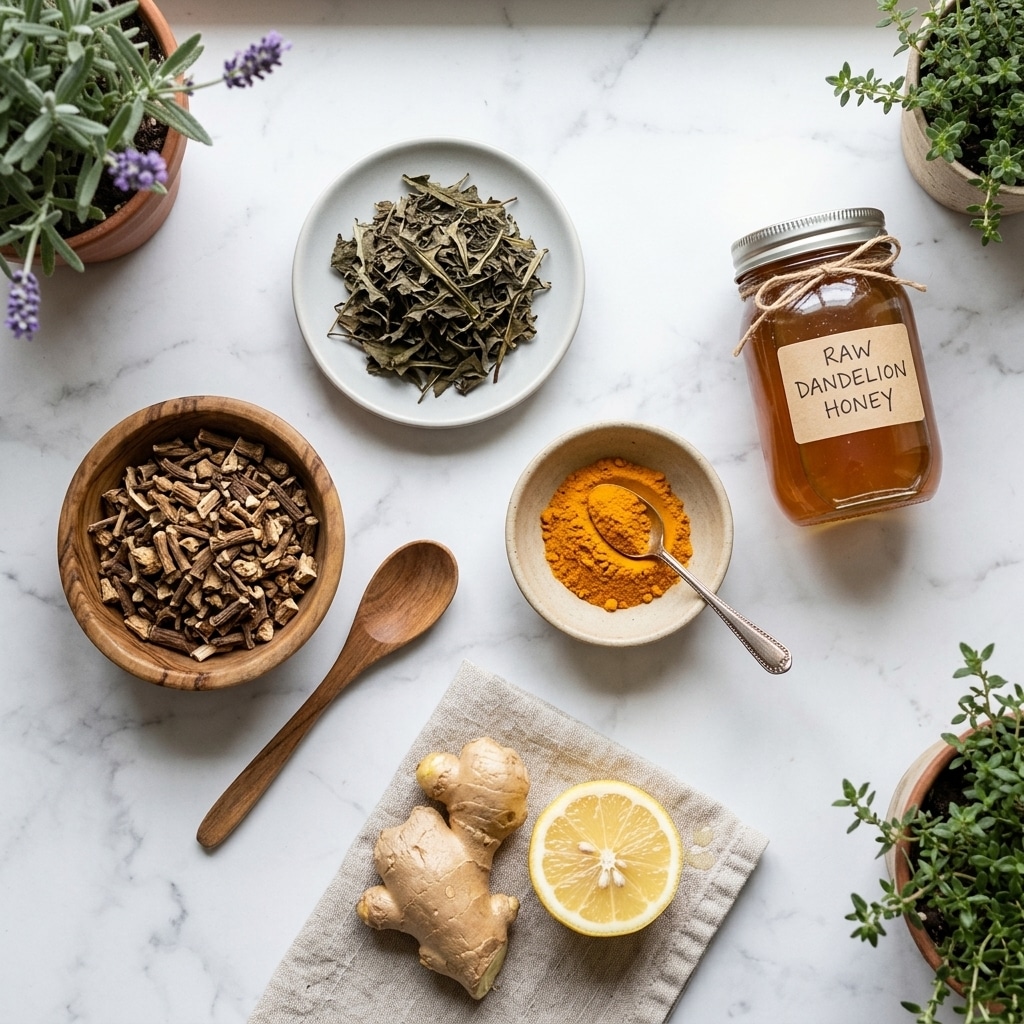
Here’s what I use for a 3-cup batch — enough for one full day of sipping.
Primary ingredients:
- 2 tablespoons dried dandelion root (or 3 tablespoons fresh, scrubbed and roughly chopped)
- 1 tablespoon dried dandelion leaves (or a small handful fresh)
- 3½ cups filtered cold water
- 1 teaspoon fresh ginger, grated (see note below)
- ½ teaspoon ground turmeric
- 1 teaspoon raw honey (optional — add after brewing, never during)
- Juice of half a lemon, added right before drinking
Substitution notes:
No fresh ginger? Ground ginger works — use ¼ teaspoon. The flavor is less bright but still effective. Can’t find dandelion root? Dried dandelion root tea bags from brands like Buddha Teas or Traditional Medicinals are a reasonable substitute, though the brew will be milder. Skipping honey? A small slice of fresh apple in the cup adds natural sweetness without spiking blood sugar.
The ginger isn’t just there for flavor. It supports digestion and has anti-inflammatory properties — Healthline’s overview of ginger’s digestive benefits explains the mechanism better than I can here.
| Ingredient Option | Best For | Flavor Impact |
|---|---|---|
| Dried dandelion root | Deepest flavor, strongest effect | Earthy, roasted, slightly bitter |
| Fresh dandelion root | Spring foraging, milder taste | Lighter, grassy, slightly sweet |
| Dandelion tea bags | Convenience, beginners | Mild, less complex |
Step-by-Step Preparation Before Cooking
If you’re using fresh dandelion root, scrub it well under cold running water to get the dirt out of the grooves — I use an old toothbrush for this. Chop it into rough ½-inch pieces so the surface area is exposed.
Dried root needs no prep. Just measure it out and have everything ready before you touch the stove, because this tea rewards patience and punishes rushing.
Grate your ginger fresh right before you add it. Pre-grated ginger from a jar works in a pinch, but the volatile oils are already fading by the time it hits your cup.
Cooking Instructions
The Cooking Process Step by Step
Step 1: Add the dandelion root pieces and cold filtered water to a small saucepan. Starting cold matters — it gives the cell walls time to open before the heat hits.
Step 2: Bring to a low simmer over medium heat. Once you see small bubbles forming at the edges (not a rolling boil), reduce heat to low and cover partially.
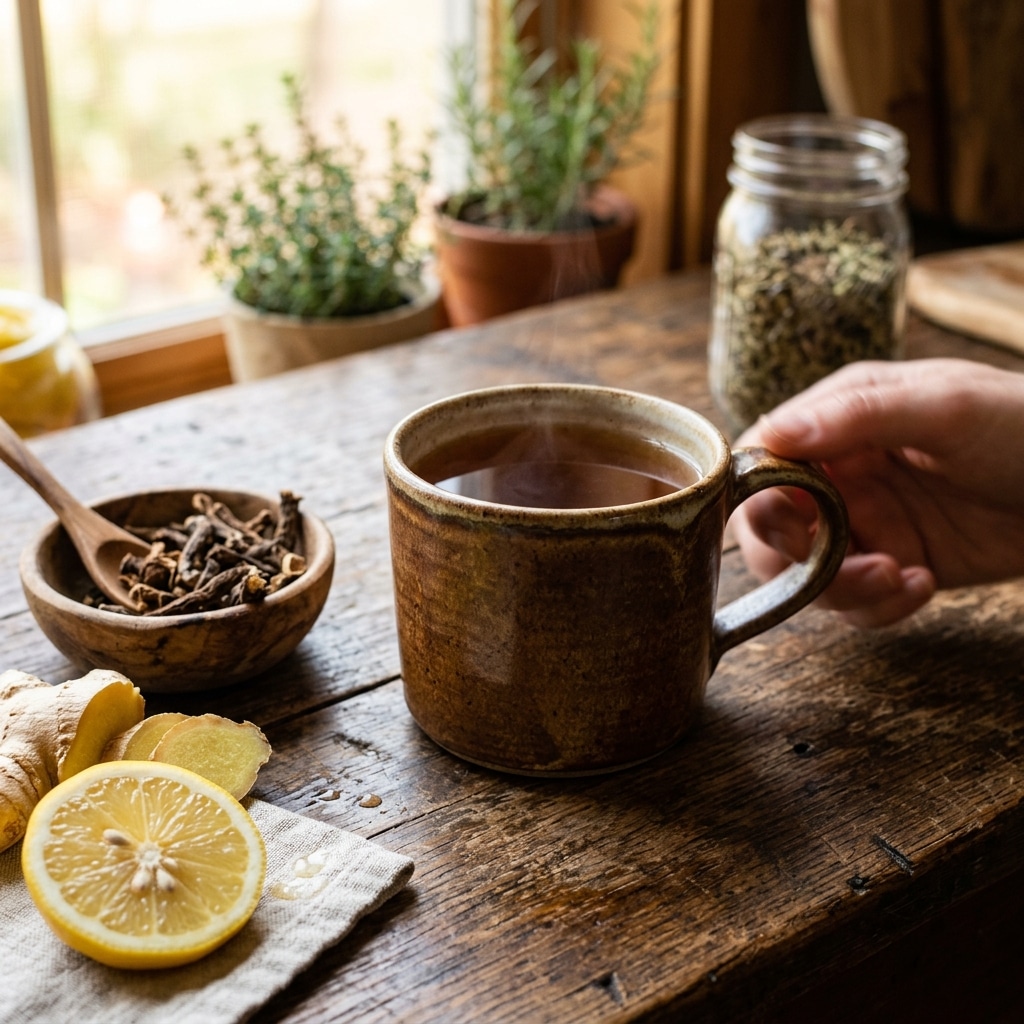
Step 3: Simmer for 20 minutes. The water will turn a warm amber-brown. Your kitchen will smell like something between coffee and earth — I find it oddly comforting now, though the first time it confused me completely.
Step 4: Remove from heat. Add the dried or fresh dandelion leaves, grated ginger, and turmeric. Place the lid on fully.
Step 5: Let steep off heat for 10 minutes. Don’t skip this rest — the leaves turn bitter if they simmer directly.
Step 6: Strain through a fine mesh strainer into your mug or a glass jar. Press the leaves gently with a spoon to release the last of the liquid.
Step 7: Add lemon juice now, before drinking. Add honey if using, but only once the tea is warm rather than hot — high heat degrades raw honey’s beneficial compounds.
How to Know When It’s Done Perfectly
The color should be a deep amber — think dark apple cider, not pale yellow. If it looks weak, your root either didn’t simmer long enough or was old and had lost its potency (I learned this the hard way with a jar that had been sitting in my pantry for 14 months).
The taste should be pleasantly bitter on the back of the tongue, earthy upfront, with a warming finish from the ginger. If it tastes flat, add more lemon. If it tastes overwhelmingly bitter, you may have simmered at too high a heat or let the leaves steep too long — next batch, pull them at 8 minutes instead of 10.
I’ve found that pairing this with a morning routine works well. My healthy matcha recipe for weight loss works beautifully as an afternoon follow-up if you’re building a full day of supportive drinks.
Serving, Storage & Variations
How to Serve It and What to Pair It With
I drink one cup before breakfast on an empty stomach — this is when the digestive benefits seem most noticeable for me personally. A second cup in the early afternoon, around 2–3pm, works well if you’re using it consistently.
Serve it warm in a wide mug with a slice of lemon on the rim and a thin round of fresh ginger if you want to look fancy. It also works iced in summer — brew it hot, let it cool, then pour over ice with a splash of sparkling water. The bitterness rounds out beautifully when cold.
Don’t drink it within two hours of bedtime. The mild diuretic effect from the leaves means your kidneys will remind you at 3am. I learned that lesson the first week and I’ve never repeated it.

Storage Tips and Variations Worth Trying
Leftover brewed tea keeps in a sealed glass jar in the refrigerator for up to 48 hours. I usually make a double batch on Sunday and store it so I’m not pulling out the saucepan every morning.
Variations I’ve tested:
Dandelion root + roasted chicory: Add 1 teaspoon of roasted chicory root to the simmer. This deepens the flavor into something almost coffee-like and adds even more prebiotic inulin. If you’re cutting back on caffeine, this version is genuinely satisfying.
Dandelion + mint: Add 5–6 fresh mint leaves to the off-heat steep. Brightens the whole cup and makes it more approachable for people who find the earthiness intense.
Dandelion + apple cider vinegar: Add 1 teaspoon of raw apple cider vinegar instead of or alongside the lemon. If you’ve ever made my coffee lemon juice weight loss drink, the flavor principle is similar — acid cuts through bitterness and adds its own digestive benefit.
Print
Dandelion Tea Recipe for Weight Loss That Actually Works
- Total Time: 35 minutes
- Yield: 3 cups 1x
Description
A two-stage dandelion root and leaf tea made with ginger, turmeric, and lemon. Supports digestion, reduces bloating, and complements a weight loss routine.
Ingredients
2 tablespoons dried dandelion root
1 tablespoon dried dandelion leaves
3½ cups filtered cold water
1 teaspoon fresh ginger, grated
½ teaspoon ground turmeric
1 teaspoon raw honey (optional)
Juice of half a lemon
Instructions
1. Add dried dandelion root and cold filtered water to a small saucepan.
2. Bring to a low simmer over medium heat, reduce to low, and partially cover.
3. Simmer for 20 minutes until the water turns deep amber.
4. Remove from heat. Add dandelion leaves, grated ginger, and turmeric. Cover fully.
5. Steep off heat for 10 minutes.
6. Strain through a fine mesh strainer into a mug or jar.
7. Add lemon juice and honey if using. Serve warm.
Notes
Start the root in cold water for better extraction.
Don’t boil — keep it at a gentle simmer.
Add lemon after straining, not during cooking.
Avoid drinking within 2 hours of bedtime due to mild diuretic effect.
Brewed tea stores in the refrigerator for up to 48 hours.
- Prep Time: 5 minutes
- Cook Time: 30 minutes
- Category: Beverage
- Method: Simmering
- Cuisine: American
Nutrition
- Serving Size: 1 cup
- Calories: 15
- Sugar: 3g
- Sodium: 5mg
- Fat: 0g
- Saturated Fat: 0g
- Unsaturated Fat: 0g
- Trans Fat: 0g
- Carbohydrates: 4g
- Fiber: 0.5g
- Protein: 0.3g
- Cholesterol: 0mg
Frequently Asked Questions
Is dandelion tea good for the pancreas?
Dandelion has traditionally been used as a liver and digestive tonic, and some animal studies suggest it may support pancreatic enzyme production. Human research is still early. If you have any pancreatic conditions, talk to your doctor before adding dandelion tea regularly — it’s not a treatment, but it may be a gentle complement to care.
What is the best time to drink dandelion tea for weight loss?
I drink my first cup 20–30 minutes before breakfast on an empty stomach. This seems to prime digestion and reduce morning bloating for me. A second cup in the early afternoon works well too. Avoid it within two hours of bedtime because of the mild diuretic effect.
Can dandelion leaves reduce belly fat?
Dandelion leaves work primarily as a gentle diuretic, which reduces water retention and bloating — so your stomach may look and feel flatter. That’s different from reducing actual fat tissue. Consistent use alongside a whole-foods diet can support the process, but the leaves alone don’t target fat cells directly.
Does dandelion lower LDL?
Some early research suggests dandelion may have a modest effect on cholesterol, but the evidence in humans is still limited. The polyphenols in dandelion root show antioxidant activity that could support heart health over time. I wouldn’t replace medication with tea, but as part of a balanced diet, it’s a worthwhile addition.
Make It This Week
This dandelion tea recipe for weight loss isn’t magic. What it is — after three years of making it, tweaking it, burning batches, getting the timing wrong, and finally landing on this version — is genuinely useful. It supports digestion, reduces bloating, and gives me a warm ritual that makes mornings feel intentional.
Brew a batch this week and stick with it for 10 days before you decide. The benefits are cumulative, not immediate. And if you want to share how it turned out, drop a comment below — I read every single one.