Every April, I start watching the shaded corners of my backyard like a hawk. That’s where my wild garlic patch comes back, year after year, pushing up those flat, glossy leaves that smell like someone turned the volume up on regular garlic. The first time I stumbled across wild garlic growing along a hiking trail in the Smoky Mountains — I didn’t even know what it was — I picked a leaf, sniffed it, and immediately thought: this has to go in butter.
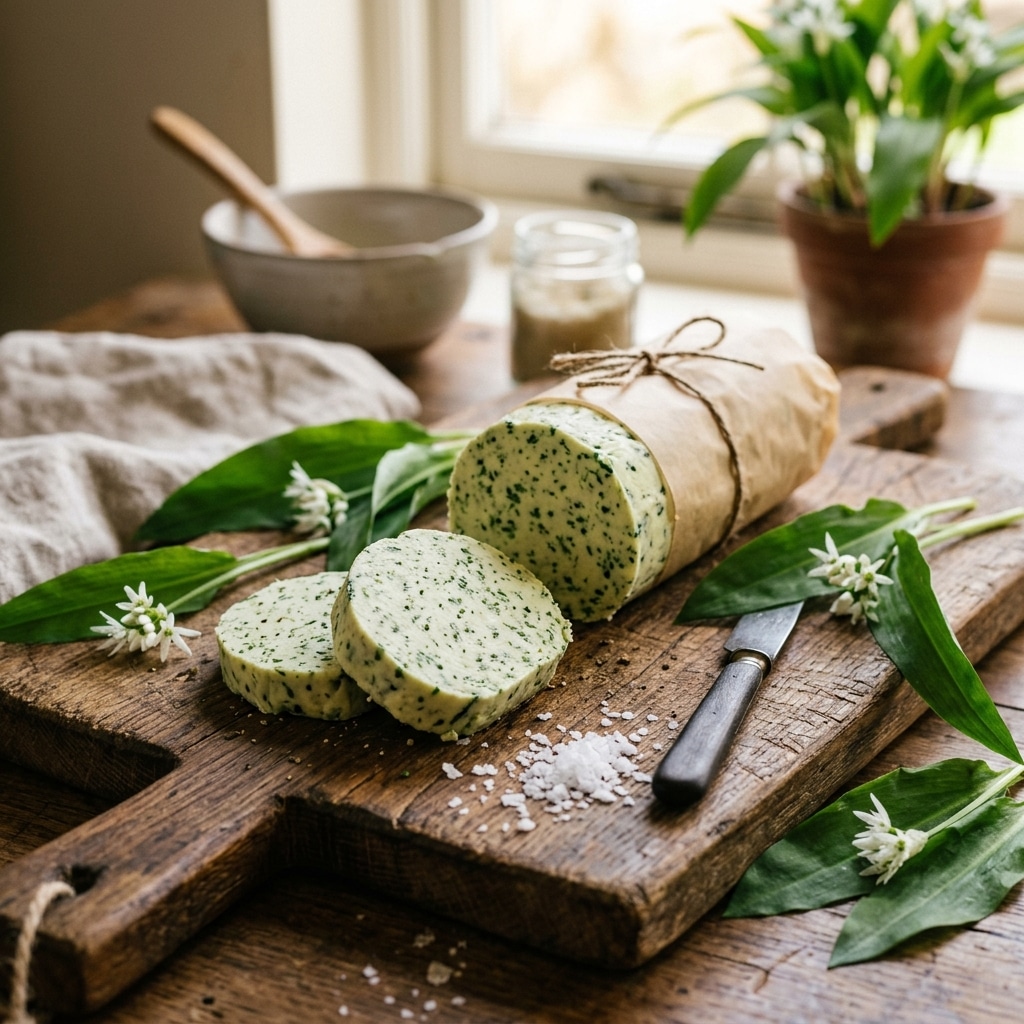
This wild garlic butter recipe is what I’ve been making ever since. It’s simple, it freezes beautifully, and it makes everything taste like you put actual effort in — even when you just dropped a slice onto toast at 7am. I’ll walk you through the ingredients, the technique, my storage method, and every variation I’ve tested in my own kitchen.
Table of Contents
Why This Wild Garlic Butter Recipe Actually Works
The Ingredient That Makes the Difference
Wild garlic — also called ramsons or Allium ursinum — is not just garlic with a fancy name. It’s softer, more herbal, and has this bright, almost grassy quality that regular garlic simply doesn’t. The leaves are what you want here, not the bulb. When I blend them into softened butter, they release their oils directly into the fat, which means every single bite carries that flavor evenly. No sharp raw-garlic punch, no bitter aftertaste.
I use unsalted butter every time. Salted butter sounds like a shortcut, but it takes away your control. I’d rather add a pinch of good flaky salt and taste as I go.
The quality of your butter matters more than you’d think. I switched to a European-style high-fat butter a few years back and the difference was immediate — richer, creamier, and it holds the herb flavor longer. If you’re already making something indulgent like cowboy butter for steak, you already know that butter quality is never the place to cut corners.
The Technique Most People Get Wrong
The biggest mistake I see — and one I made myself the first three times — is adding the wild garlic to butter that’s too warm. If your butter is melted or even close to it, the heat kills the volatile compounds that give wild garlic its flavor. You end up with green butter that tastes vaguely of nothing.
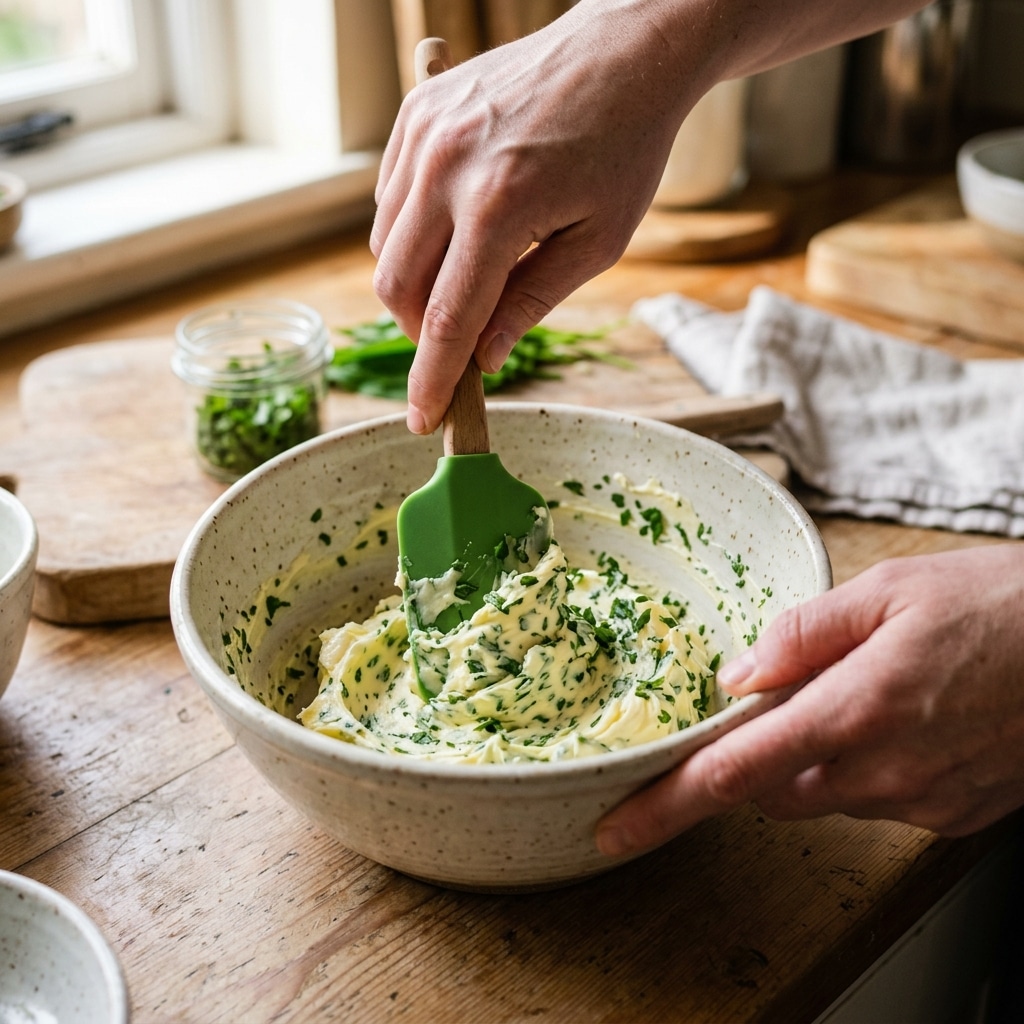
Your butter needs to be genuinely room temperature: soft enough to press with a finger, but still holding its shape. In my kitchen in summer, that means about 30 minutes on the counter. In winter, closer to an hour. I chop the leaves finely — not paste-fine, but small — and fold them in by hand with a silicone spatula. Folding, not whipping. You want green flecks throughout, not a uniformly green spread.
Ingredients and Preparation
Full Ingredient List With Substitution Notes
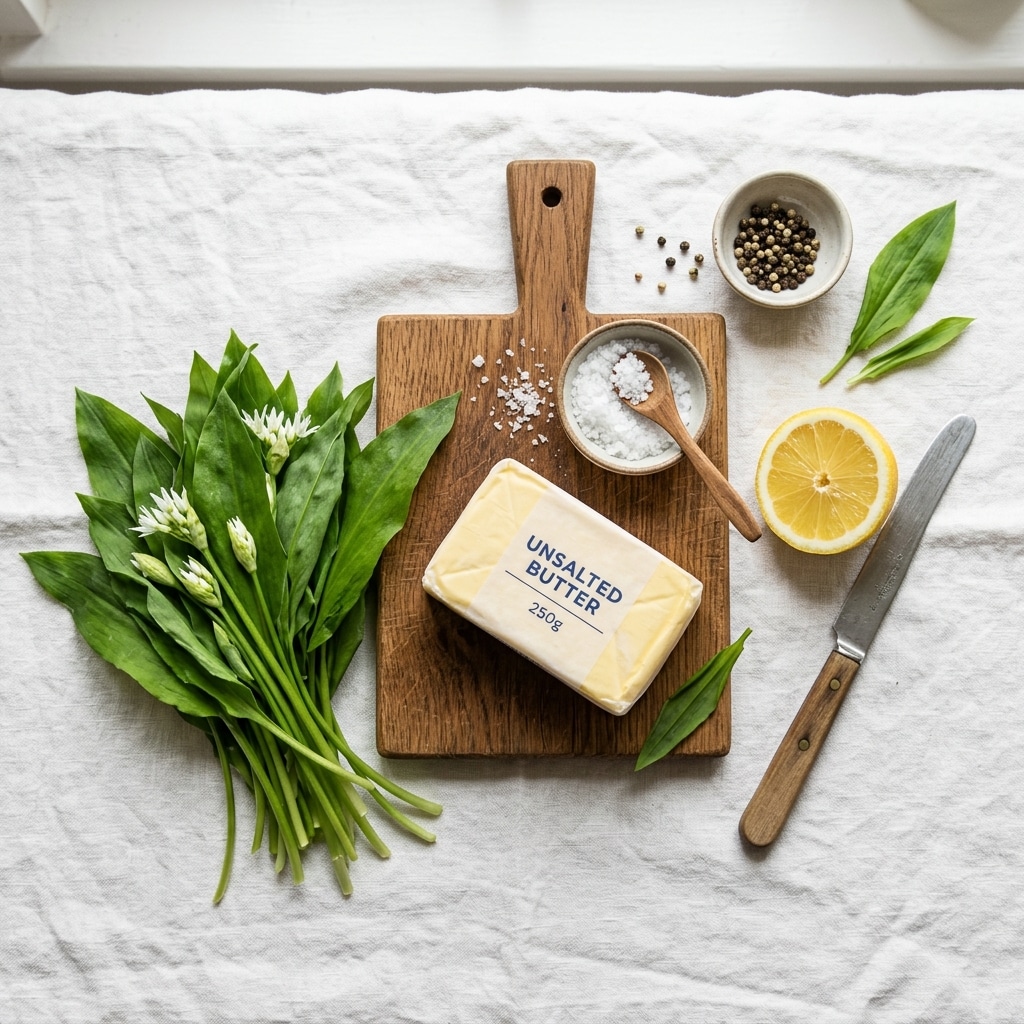
- 1 cup (225g) unsalted butter, at room temperature — European-style preferred
- 1 cup (loosely packed) fresh wild garlic leaves, washed and dried thoroughly
- ½ teaspoon flaky sea salt — Maldon is my go-to
- 1 teaspoon fresh lemon juice — brightens everything without making it taste lemony
- Optional: 1 tablespoon fresh chives, finely chopped
- Optional: ½ teaspoon black pepper, freshly cracked
If you genuinely can’t find wild garlic, you can substitute with 2 tablespoons of regular garlic (roasted, not raw) plus a handful of fresh chives and a little flat-leaf parsley. It’s not the same — I want to be honest about that — but it gets you somewhere close. For a nuttier, slightly different compound butter direction, my pistachio butter recipe follows a similar fold-and-chill technique worth reading.
Step-by-Step Preparation Before Cooking
Wash your wild garlic leaves well and dry them completely. Any water left on the leaves will make your butter watery and it won’t hold its shape when you roll it. I spread mine on a clean kitchen towel and pat them dry, then leave them out for 10 minutes.
Chop the leaves finely on a large cutting board. I go through them twice — once rough, once fine. You want pieces small enough to distribute evenly but visible enough that people know what they’re eating.
Here’s a quick comparison of the most common wild garlic butter variations I’ve tested, so you can decide which direction fits your cooking:
| Version | Best Used For | Flavor Profile |
|---|---|---|
| Classic (leaves + butter + salt) | Toast, pasta, vegetables | Clean, herbal, bright |
| With lemon zest | Fish, chicken, seafood | Brighter, citrusy edge |
| With chives and black pepper | Steak, potatoes, grilled bread | Bolder, more savory |
| With a pinch of chili flakes | Flatbreads, corn, roasted carrots | Herbal with gentle heat |
Cooking Instructions
The Process Step by Step
Place your softened butter in a medium mixing bowl. Add the chopped wild garlic leaves, salt, and lemon juice. Using a silicone spatula, fold everything together with firm, slow strokes — about 2 minutes of steady folding until the leaves are fully incorporated and the butter looks consistently flecked with green.
Taste it. This is the step I skipped the first time and regretted. Wild garlic varies in intensity depending on the season and where it was grown. Early spring leaves are milder; late spring leaves are sharper. Adjust salt and lemon to your taste before you commit to rolling.
Lay a sheet of plastic wrap flat on your counter. Spoon the butter mixture down the center in a rough log shape, then roll the plastic around it and twist the ends tight. Roll it back and forth a couple of times on the counter to tighten it into a uniform cylinder. These crispy garlic butter potatoes use a similar compound butter log technique — slicing coins of cold butter straight onto hot food is one of the most satisfying moves in home cooking.
Refrigerate for at least 2 hours before using. I usually make mine the night before.
How to Know When It’s Done Perfectly
The butter log should be firm enough to slice cleanly with a sharp knife — if it crumbles or smears, it needs another hour in the fridge. The color should be pale green throughout with visible dark green flecks. If it looks yellow with just a few pieces of herb on the surface, it wasn’t folded enough.
The smell test is the most reliable one. Hold a slice close and you should get that clean, sharp, green-garlic scent immediately. If it smells mostly like plain butter, the leaves may have been wet, or the butter was too warm when you mixed it.
Serving, Storage, and Variations
How to Serve It and What to Pair With It
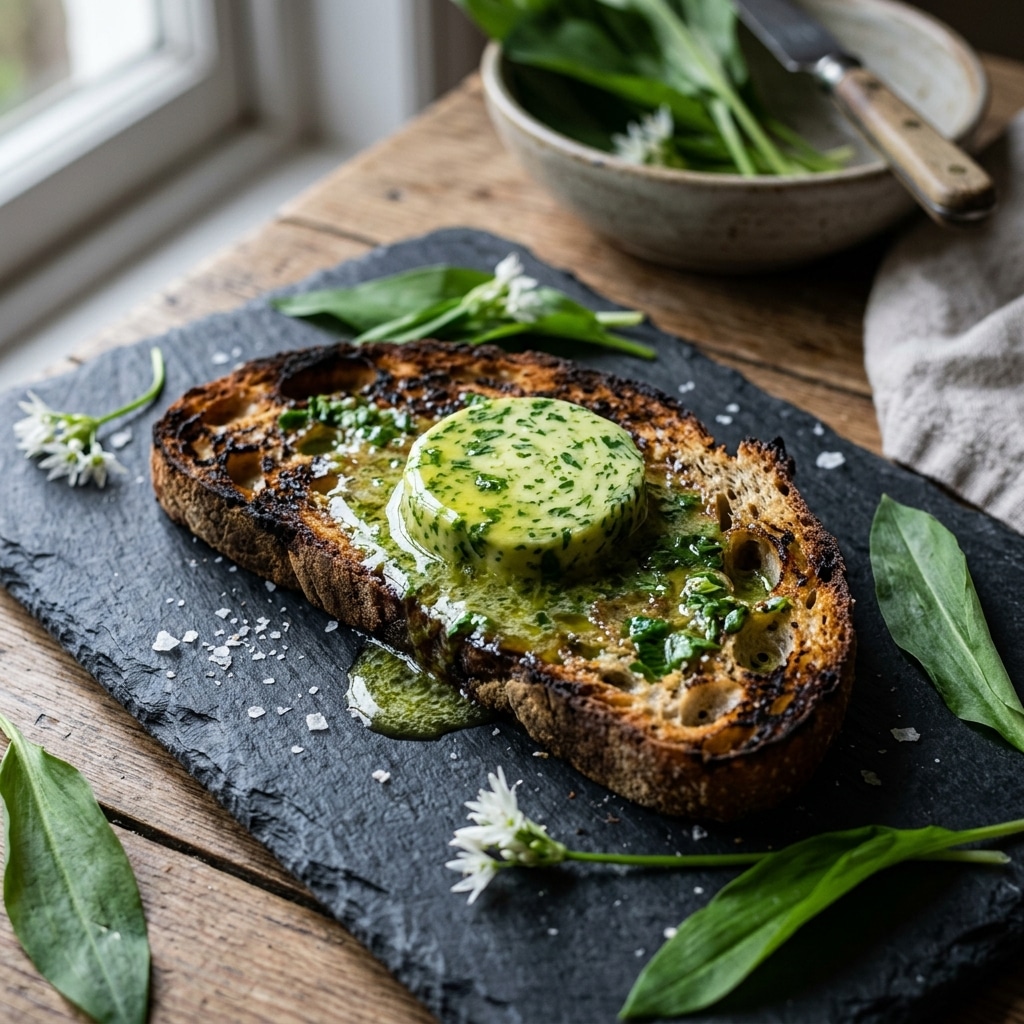
The simplest use is also the best one: a thick slice on hot sourdough toast. The butter melts into the bread and the wild garlic smell fills the whole kitchen. My kids come running every time.
Beyond toast, I use this butter on grilled fish, stirred into warm pasta with a little pasta water, melted over steamed new potatoes, or dropped onto a steak the last minute it’s in the pan. It works anywhere you’d use herb butter — which is basically everywhere.
For a full spring dinner, I’ll serve it alongside a simple green salad and something with eggs. The herbal, garlicky butter bridges savory and fresh in a way that feels intentional without being complicated.
Storage Tips and Variations Worth Trying
In the fridge, wrapped tightly in plastic, this butter keeps for up to 10 days. I’ve pushed it to 12 and it was still good. The flavor actually deepens slightly after the first day, which is reason enough to make it ahead.
For freezing: yes, absolutely. Wrap the log in plastic, then in foil, and freeze for up to 3 months. I slice the log into coins before freezing so I can pull out exactly what I need without defrosting the whole thing. According to the USDA, butter can be safely frozen for up to 9 months — but with fresh herbs mixed in, I’d stay within 3 months for best flavor.
Variations I’ve actually made and recommend: add a tablespoon of white miso for a deeper umami note, swap the lemon juice for a splash of dry white wine (reduce it first), or fold in finely grated Parmesan for a pasta-specific butter that’s completely over the top in the best way. The Healthline guide on garlic’s nutritional properties is worth a read if you’re curious about why wild garlic has been used in traditional cooking for centuries — the allicin content is impressive.
Frequently Asked Questions
What does wild garlic taste like?
It’s milder than regular garlic — more herbal and green-tasting, almost like a cross between garlic and chives with a grassy brightness underneath. Early spring leaves are the gentlest. By late spring they get sharper. Raw, a single leaf has real punch; cooked or mixed into butter, it becomes soft and rounded.
How to use wild garlic butter?
Slice a coin of cold butter onto hot grilled meat, toss it with warm pasta, spread it on toast, or melt it over roasted vegetables. It works any place you’d use regular butter — the wild garlic flavor just makes everything taste more intentional. I use it most on sourdough and pan-seared fish.
Can you eat wild garlic raw?
You can, and it’s actually delicious raw in small amounts — chopped into salads, stirred into yogurt, or laid flat on a buttered cracker. The flavor is stronger raw than cooked. Just make sure you’re foraging correctly, because wild garlic can be confused with lily of the valley, which is toxic. When in doubt, buy from a trusted source.
Can you freeze garlic butter?
Yes, and I’d argue it’s one of the best things to freeze. Slice the log into individual coins before freezing so you can grab exactly what you need. Frozen wild garlic butter goes straight from freezer to hot pan or hot food — no thawing required. Quality holds well for up to 3 months.
How to store wild garlic butter properly?
Wrap it tightly in plastic wrap rolled into a log shape and refrigerate for up to 10 days. Keep it away from strong-smelling foods in the fridge — butter absorbs odors quickly. For longer storage, wrap in plastic and foil and freeze for up to 3 months, slicing into coins before freezing.
One Last Thing Before You Make This
I’ve given this wild garlic butter as a gift in small mason jars more times than I can count. People always ask for the recipe like I’ve done something complicated. The truth is it takes about 10 minutes of actual work — the rest is just waiting for butter to soften and then chilling the log.
Make a double batch. Use half now, freeze the rest. When August rolls around and wild garlic is long gone for the season, you’ll pull a coin out of the freezer, drop it on something ordinary, and feel like you saved a little bit of spring. Go make it this week while the leaves are still fresh — you won’t regret it.