If you’re looking for a fresh, tangy side dish that’s both healthy and bursting with flavor, this Daikon Radish Pickle Recipe will be your new favorite. Pickled daikon adds a bright, zesty crunch to meals and pairs beautifully with Asian-inspired dishes, sandwiches, and grain bowls. In this article, you’ll discover everything you need to know—from the best ingredients and cutting methods to expert pickling tips and how to keep your daikon crisp for weeks.
Looking for inspiration? Try our Pickled Cauliflower Recipe to explore more easy pickling ideas.
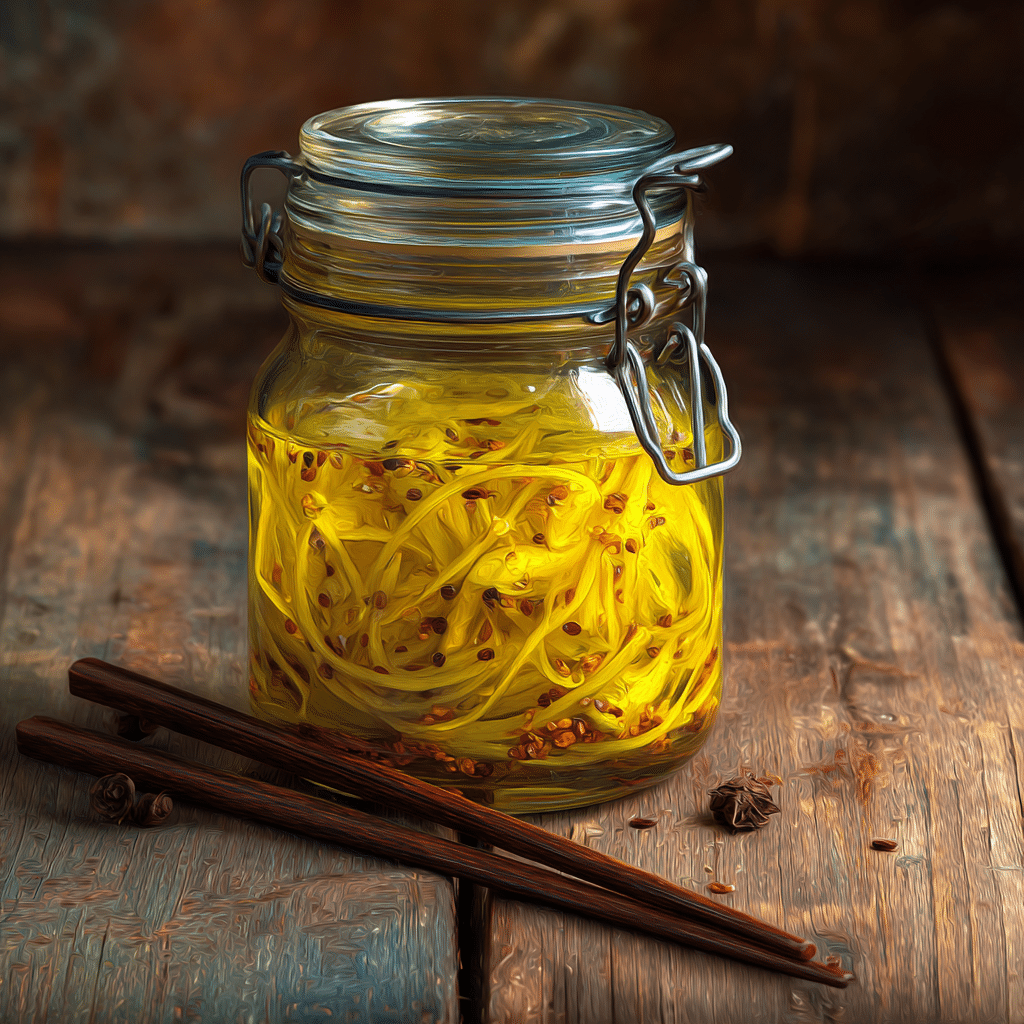
Table of Contents
Why Pickle Daikon Radish?
Flavor & Texture Benefits
Pickling transforms daikon radish from plain and peppery to delightfully tangy and crunchy. The natural sharpness of the radish softens once it’s soaked in vinegar and sugar, resulting in a crisp yet mellow bite. This Daikon Radish Pickle Recipe offers the perfect mix of sweet, sour, and slightly salty notes that awaken your taste buds. The pickle’s firm texture makes it a versatile side—it can complement rich meats, balance out spicy foods, or add crunch to vegetarian meals.
Health & Nutritional Advantages
Beyond taste, pickled daikon offers several nutritional perks. Daikon is naturally low in calories and packed with vitamin C, fiber, and antioxidants that support digestion and immune health. When you pickle it using this Daikon Radish Pickle Recipe, you also create a probiotic-rich food that’s good for your gut—especially when it’s slightly fermented. Unlike heavily processed pickles, homemade versions let you control sodium and sugar levels, keeping your recipe fresh, clean, and wholesome. Learn more about the botanical background of daikon radish in Britannica’s daikon entry.
Discover great ideas like our Lemon Ginger Ferment Recipe, another refreshing way to boost gut health naturally.
Print
Daikon Radish Pickle Recipe — How to Make Crispy & Flavorful Pickled Daikon
- Total Time: 25 mins
- Yield: 2 jars 1x
- Diet: Vegan
Description
A crisp, tangy, and refreshing Daikon Radish Pickle Recipe perfect for any Asian-inspired meal.
Ingredients
1 large daikon radish
1 cup rice vinegar
1/2 cup water
1/3 cup sugar
1 tbsp salt
2 garlic cloves
1 tsp peppercorns
1/2 tsp turmeric (optional)
Instructions
1. Sterilize jars and prepare daikon.
2. Slice daikon evenly and salt to remove bitterness.
3. Boil vinegar, sugar, and salt for brine.
4. Pour brine over daikon, seal jars.
5. Refrigerate for at least 24 hours before serving.
Notes
For a spicier version, add red chili or ginger. Store in fridge for up to 1 month.
- Prep Time: 20 mins
- Cook Time: 5 mins
- Category: Side Dish
- Method: Pickling
- Cuisine: Asian
Nutrition
- Serving Size: 100g
- Calories: 35
- Sugar: 7g
- Sodium: 180mg
- Fat: 0g
- Saturated Fat: 0g
- Unsaturated Fat: 0g
- Trans Fat: 0g
- Carbohydrates: 7g
- Fiber: 1g
- Protein: 0.8g
- Cholesterol: 0mg
Key Ingredients for a Great Daikon Pickle
Creating a balanced Daikon Radish Pickle Recipe depends on simple yet essential ingredients that work together to enhance flavor, texture, and shelf life. Each component plays a role in achieving that perfect blend of tanginess, sweetness, and crunch.
Choosing the Right Daikon Radish
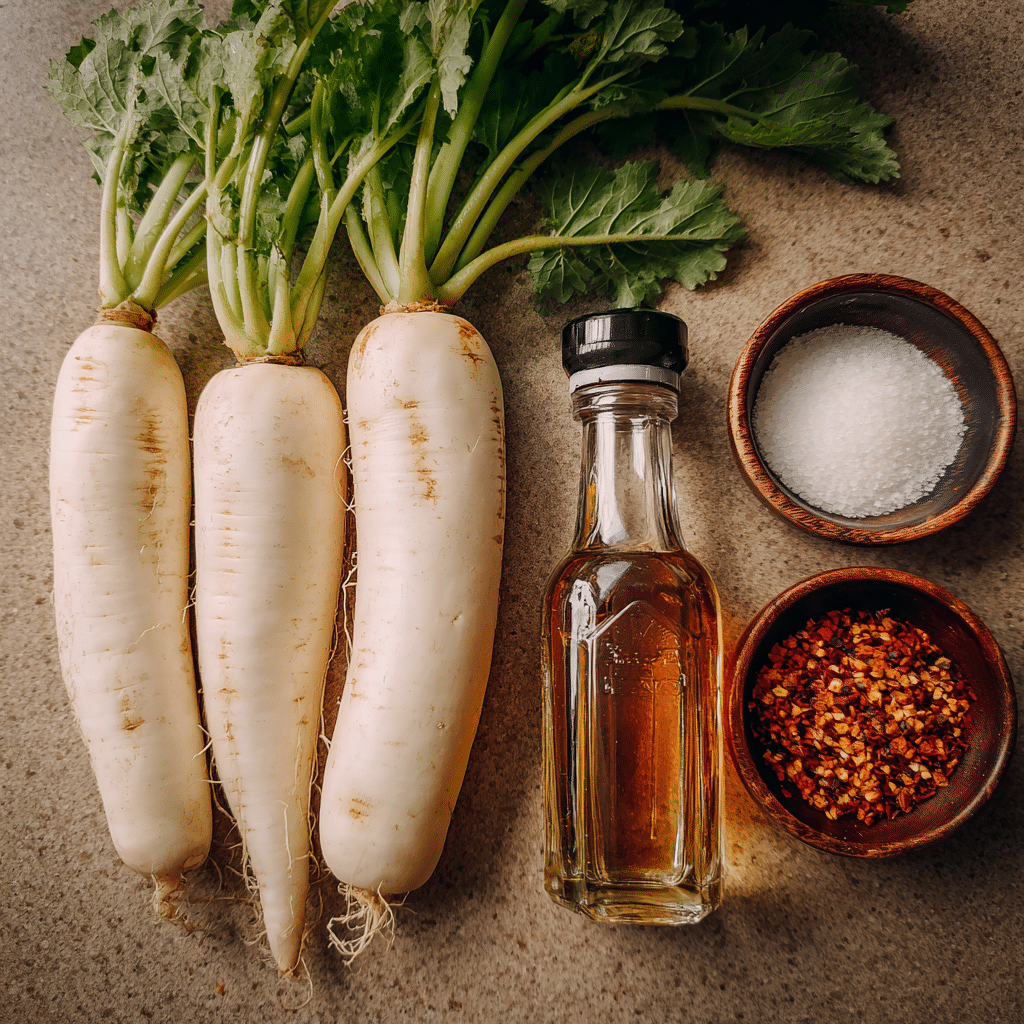
Start with the freshest daikon radish you can find. Look for firm, heavy roots with smooth, white skin and crisp texture. Avoid soft spots or cracks, as these may affect the final pickle’s crunch.
Young daikons are usually milder and less bitter, while older ones can have a sharper taste. If you’re making this Daikon Radish Pickle Recipe for the first time, choose a medium-size radish—about 2 inches thick and 8–10 inches long—for a balance of sweetness and crispness.
Tip: You can substitute white radish or even watermelon radish if daikon isn’t available. The flavor will differ slightly, but the texture remains satisfying.
For more nutritional facts and culinary uses, see Nature’s Produce encyclopedia on daikon.
Vinegar, Sugar, Salt, and Spices
At the heart of every good Daikon Radish Pickle Recipe is the brine. It’s a delicate balance of vinegar, sugar, and salt that determines the final flavor.
- Vinegar: Rice vinegar gives a mild, slightly sweet tang, while distilled white vinegar creates a sharper, more intense flavor. You can also experiment with apple cider vinegar for a fruity twist.
- Sugar: White sugar softens the radish’s natural bite. For deeper flavor, try brown sugar or honey.
- Salt: Sea salt or pickling salt is best—avoid iodized salt, which can cloud the brine.
- Spices: Add garlic cloves, chili flakes, peppercorns, or turmeric for extra aroma and heat. A small piece of ginger enhances the freshness of the pickle, making it even more vibrant.
Want to learn about other bright, tangy pairings? Discover our Watermelon Cucumber Feta Mint Salad for a refreshing side that complements pickles perfectly.
Optional Additions and Variations
Once you master the basics, experiment with creative twists.
- Carrots: Add sweetness and color when paired with daikon (especially for Vietnamese-style pickles).
- Beets: Use thin slices for a natural pink tint.
- Ginger: Adds zest and boosts digestion.
- Chili Peppers: Spice things up for a bold Korean-style kick.
For those who prefer a probiotic touch, try a short fermentation step using natural starters—similar to the one in our Lemon Ginger Ferment Recipe. It enhances both flavor and gut-friendly benefits.
Sample Ingredient Table
| Ingredient | Purpose | Substitution | Notes |
|---|---|---|---|
| Daikon Radish | Main vegetable | White radish, watermelon radish | Choose firm and fresh |
| Vinegar | Tangy base | Rice, white, or apple cider vinegar | Adjust acidity to taste |
| Sugar | Balances sourness | Honey, agave, stevia | Start with small amounts |
| Salt | Preserves and enhances flavor | Sea salt, kosher salt | Avoid iodized |
| Turmeric / Chili | Adds color or spice | Paprika, ginger | Optional but adds depth |
How to Make Daikon Radish Pickle (Step-by-Step Recipe)
Making a flavorful and crisp Daikon Radish Pickle Recipe at home is surprisingly easy. Whether you’re trying it for the first time or refining your pickling technique, this step-by-step guide walks you through everything—from sterilizing jars to achieving the perfect brine balance.
Step 1: Sterilize Your Jars and Prepare the Equipment
Cleanliness is key to successful pickling. Start by washing your glass jars with hot, soapy water, then rinse well. Place them in boiling water for 10 minutes or run them through a dishwasher’s sterilize cycle.
Let the jars dry completely before adding any ingredients. This prevents unwanted bacteria and ensures your Daikon Radish Pickle Recipe stays fresh for weeks.
Use non-reactive containers like glass or ceramic; avoid metal lids that can react with vinegar.
If you enjoy homemade ferments, check out our Ginger Bug Recipe to learn another safe, bacteria-friendly kitchen process.
Step 2: Prepare the Daikon
Cut your daikon radish into the desired shape—julienne, cubes, or rounds—depending on how you plan to serve it. Follow the bitterness removal methods from Part 5 if needed.
After rinsing and drying, pack the daikon pieces tightly into your clean jars, leaving about an inch of space at the top.
For a colorful variation, add thin carrot slices or a few pieces of red chili pepper to the mix. These add visual appeal and flavor contrast without overpowering the daikon.
Step 3: Make the Pickling Brine
In a small saucepan, combine the following for one standard jar (16 oz):
- 1 cup rice vinegar or white vinegar
- ½ cup water
- ⅓ cup sugar
- 1 tablespoon salt
- Optional: 2 garlic cloves, 1 teaspoon peppercorns, ½ teaspoon turmeric or chili flakes
Bring the mixture to a light boil, stirring until the sugar and salt dissolve completely. Remove from heat and allow it to cool slightly—about 10 minutes—before pouring over your daikon.
The balanced mix of sour, sweet, and salty in this brine gives your Daikon Radish Pickle Recipe its signature flavor and crispness.
Step 4: Combine and Seal
Slowly pour the cooled brine over the daikon until the vegetables are fully submerged. Tap the jar gently to release trapped air bubbles. Add more brine if needed.
Seal the jars tightly and allow them to cool at room temperature for an hour before refrigerating. This short resting period helps the flavors settle evenly.
For a delicious twist, try adding a splash of the tangy liquid from our Marinated Red Onions; it deepens the color and adds subtle sweetness.
Step 5: Pickling and Storing
Refrigerate your jarred daikon for at least 24 hours before tasting. The flavor develops further over time—by day three, it reaches full depth. Quick pickles are ready in a day, while long-fermented versions can stay in the fridge for weeks.
To maintain texture, always use clean utensils when scooping from the jar and ensure the daikon stays submerged in liquid.
Discover more storage-friendly ideas in our Pickled Cauliflower Recipe—a great reference for long-lasting homemade pickles.
Step 6: Taste and Adjust
Once your Daikon Radish Pickle Recipe is ready, taste it! If it’s too sour, add a bit of sugar to the brine next time. If too mild, increase the vinegar or let it sit longer. The beauty of homemade pickling is flexibility—adjust to your preference.
For a richer, slightly spicy profile, toss in a slice of fresh ginger or a few chili flakes before serving. This adds warmth and complexity that pairs beautifully with grilled meats or rice bowls.
Storage Quick Chart
| Storage Type | Pickling Time | Shelf Life | Flavor Intensity |
|---|---|---|---|
| Room Temperature (Short) | 12–24 hours | 1–2 days | Mild |
| Refrigerated (Quick Pickle) | 1–3 days | Up to 1 month | Balanced |
| Fermented (Long) | 5–7 days | Up to 2 months | Deep, tangy |
Every method results in a deliciously tangy side that fits different meals and tastes. Your Daikon Radish Pickle Recipe is now complete—time to enjoy it with noodles, sandwiches, or grilled dishes.
Styles of Pickled Daikon — From Korean Danmuji to Japanese Takuan
Pickling daikon isn’t limited to one tradition. Around Asia, people prepare it in several unique ways—each with distinct flavors, textures, and colors. Whether you prefer the bright sweetness of Korean danmuji or the earthy depth of Japanese takuan, you’ll find a version of this Daikon Radish Pickle Recipe that suits your taste perfectly.
Korean Pickled Daikon (Danmuji or Chicken Mu)
In Korean cuisine, danmuji or chicken mu is a staple. This golden-yellow pickle is often served alongside fried chicken, kimbap, or spicy stews to balance heat with sweetness. The secret behind its color is a touch of turmeric, which adds a subtle earthiness. The Daikon Radish Pickle Recipe for Korean style usually includes rice vinegar, sugar, salt, and sometimes a hint of chili for gentle warmth.
The result is crisp, slightly sweet, and absolutely addictive.
Check out our Marinated Red Onions for another tangy complement that pairs beautifully with Korean fried dishes.
Japanese Pickled Daikon (Takuan or Tsukemono)
In Japan, takuan is a beloved side served with rice or sushi. Traditionally, daikon is sun-dried before pickling, giving it an extra-crunchy texture and a deeper flavor. This Daikon Radish Pickle Recipe variation uses rice bran, turmeric, and sea salt to achieve its trademark yellow hue and slightly funky aroma.
The fermentation period can range from a few days to several weeks, depending on how tangy or rich you want the taste.
Unlike Korean danmuji, takuan has a mildly savory note—perfect for balancing rich rice dishes or fatty fish.
Vietnamese Pickled Daikon and Carrot (Đồ Chua)
Vietnamese đồ chua combines daikon with carrots, creating a colorful and crunchy pickle used in bánh mì sandwiches and noodle salads. This Daikon Radish Pickle Recipe includes equal parts sugar and vinegar for a sharp yet refreshing flavor that complements grilled meats or tofu.
It’s a quick pickle—ready in as little as an hour—and keeps its crispness for several weeks in the fridge.
Don’t miss our Ginger Bug Recipe to learn how natural fermentation can enhance the flavor of homemade pickles like this one.
Comparing Regional Flavors
| Style | Country | Taste Profile | Color | Common Use |
|---|---|---|---|---|
| Danmuji | Korea | Sweet, tangy, mild heat | Bright yellow | Fried chicken, kimbap |
| Takuan | Japan | Savory, earthy, slightly funky | Deep yellow | Rice, sushi, bento |
| Đồ Chua | Vietnam | Sweet, sour, refreshing | White + orange | Sandwiches, salads |
Each culture uses the daikon’s natural crunch differently, but they all share one thing: a love for balance between sweet and sour. By experimenting with these variations, you can customize your Daikon Radish Pickle Recipe to suit any meal.
Cutting Techniques for Pickled Daikon
Before you start the brining process, learning how to cut your daikon radish correctly is crucial. The size and shape of each piece determine how fast it absorbs flavor, how crisp it stays, and even how it looks in the jar. With the right cutting style, your Daikon Radish Pickle Recipe will not only taste amazing but also look picture-perfect.
Julienne or Matchstick Cut
If you’re short on time, the julienne cut—thin matchstick strips—is your best option. These small pieces pickle quickly, often within an hour. This style is ideal for quick refrigerator pickles or Vietnamese-style đồ chua, which often mixes daikon and carrot in equal parts.
Use a mandoline slicer or a sharp knife for consistent thickness. The thinner the slices, the faster the brine penetrates, giving you a flavorful, crunchy pickle in no time.
Pro tip: For crisp texture, soak the julienned daikon in ice water for 10 minutes before pickling. It enhances crunch and freshness.

Cubes, Dice, or Thick Strips
Cubes or thick sticks of daikon create a hearty bite with a juicy snap. This cut works best for Korean-style Daikon Radish Pickle Recipes such as chicken mu, where you want noticeable chunks that can stand up to strong sauces or fried foods.
To prepare, cut your daikon into half-inch slices, then into cubes or long rectangular batons. Because these pieces are larger, they take longer to pickle—usually a day or two for full flavor.
Don’t miss our Pickled Cauliflower Recipe for another example of chunky, flavorful vegetable pickles.
Rounds, Half-Moons, or Batons
Round slices are classic for Japanese-style takuan, where daikon is often sun-dried before pickling. These beautiful circles look elegant in sushi rolls, rice bowls, or bento boxes. Half-moons or batons—created by slicing the daikon lengthwise before cutting—are great for side dishes or garnishes.
When using these shapes, make sure each piece is uniform in thickness to ensure even pickling. Uneven cuts can result in some slices being too salty or too soft.
This versatile Daikon Radish Pickle Recipe lets you experiment with styles until you find the perfect match for your meals.
Cutting Style Comparison
| Cutting Style | Time to Pickle | Best For | Texture |
|---|---|---|---|
| Julienne / Matchstick | 1–2 hours | Quick pickles, salads | Crisp, light |
| Cubes / Thick Strips | 1–2 days | Korean-style pickles | Crunchy, juicy |
| Rounds / Half-Moons | 2–5 days | Japanese-style pickles | Firm, chewy |
Each method adds variety to your Daikon Radish Pickle Recipe, letting you create pickles for any occasion—whether a quick snack, a sushi side, or a sandwich topping.
Expert Tip: Keep It Consistent
Always keep your slices even. Irregular cuts cause uneven soaking, which can lead to mixed textures or unbalanced flavors. For best results, use a mandoline or julienne peeler.
Looking for more fresh side dish ideas? Don’t miss our Patty Pan Sunburst Squash Guide, which shows how different slicing methods affect cooking and flavor—just like pickling.
Variations, Flavor Twists & Pro Tips
One of the best things about a Daikon Radish Pickle Recipe is its flexibility. With just a few adjustments, you can change the flavor profile from sweet and mild to spicy or deeply tangy. Below are several creative ways to personalize your pickle, followed by expert tips that ensure lasting crunch and bright flavor.
Spicy, Garlicky & Chili Variations
If you love bold, zesty flavors, spice things up by adding garlic and chili to your brine. Slice two cloves of garlic and toss in a teaspoon of red pepper flakes or one small chili pepper. The heat slowly infuses into the vinegar, making every bite pop.
You can also use gochugaru (Korean red pepper flakes) for a smoky flavor similar to what’s used in danmuji—a spicy Korean daikon pickle variation.
Want to explore other bold flavors? Learn how layered spice transforms vegetables in our Pickled Cauliflower Recipe.
Adding Turmeric or Beet for Color
To make your Daikon Radish Pickle Recipe more visually stunning, consider adding turmeric or beets.
A small pinch of turmeric in the brine turns the daikon a bright golden-yellow while adding subtle earthiness—ideal for a Japanese takuan-style pickle. If you prefer something vibrant and pink, add a few thin beet slices to the jar. The color naturally bleeds into the brine, giving you an Instagram-worthy finish without artificial dyes.
This method doesn’t just enhance appearance—it boosts antioxidants and nutrients, too.
Layering Flavors with Herbs & Aromatics
Herbs are a wonderful way to elevate your pickle’s complexity. Try adding:
- Fresh ginger slices for brightness
- Bay leaves for subtle depth
- Dill sprigs for a cross between Asian and Western pickle styles
- Coriander or mustard seeds for a nutty aroma
These additions infuse gradually, meaning your pickle’s flavor deepens over time. By day three, your Daikon Radish Pickle Recipe will taste richer, more rounded, and perfectly balanced.
Crispness Tips for Long-Lasting Pickles
Keeping daikon crunchy is one of the biggest pickling challenges. Here’s how to preserve that satisfying bite:
- Use Fresh Daikon: Older radishes soften faster in vinegar.
- Add a Small Piece of Kombu or Grape Leaf: These contain tannins that naturally prevent softening.
- Keep It Cold: Store pickles in the back of your fridge, where the temperature is most stable.
- Avoid Overcrowding: Leave space in the jar so liquid can circulate evenly.
Discover great ideas like our Watermelon Cucumber Feta Mint Salad, which also uses natural freshness and acidity for crisp, clean textures.
Flavor Pairing Chart
| Flavor Add-In | Resulting Taste | Ideal Pairings |
|---|---|---|
| Chili + Garlic | Spicy & aromatic | Fried foods, noodles |
| Turmeric + Sugar | Warm & slightly sweet | Rice dishes, sushi |
| Beet + Ginger | Earthy & tangy | Salads, sandwiches |
| Mustard Seeds + Dill | Savory & herbaceous | Grilled meats |
Each tweak brings new dimensions to your Daikon Radish Pickle Recipe, letting you customize it to match any meal or mood.
Expert Pickling Insights
- Adjust Sweetness Gradually: Too much sugar can dull the tang; start small and increase if needed.
- Taste Often: Every few hours in the fridge, give it a quick check—especially in the first two days.
- Reuse Brine Carefully: You can reuse the brine once, but always reheat and cool it first to maintain freshness.
- Experiment with Fusion: Add soy sauce or sesame oil for an Asian-inspired twist.
Don’t miss our Lemon Ginger Ferment Recipe for another creative way to play with flavor layers using simple, natural ingredients.
Frequently Asked Questions About Pickled Daikon Radish
How to cut daikon radish for pickling?
Cutting style matters! The shape affects flavor absorption and texture.
Julienne or matchstick cuts pickle fastest—perfect for quick Vietnamese-style pickles.
Cubes or thick strips work best for Korean danmuji or chicken mu.
Rounds or half-moons create elegant Japanese-style takuan.
For even results, keep all slices uniform in size. This ensures that every bite of your Daikon Radish Pickle Recipe has the same crispness and balanced taste.
Is pickled daikon radish good for you?
Yes, pickled daikon radish is quite healthy—especially when made at home. It’s low in calories and rich in vitamin C, potassium, and digestive enzymes. When you follow this Daikon Radish Pickle Recipe, you can control the sodium and sugar content while boosting your intake of gut-friendly bacteria, especially if slightly fermented. Eating a few slices daily supports digestion and provides a refreshing balance to rich or spicy foods.
Conclusion
Making your own Daikon Radish Pickle Recipe is one of the easiest ways to bring bold, refreshing flavor into your kitchen. With just a handful of ingredients, you can transform a simple root vegetable into a crunchy, vibrant side dish that elevates any meal. Whether you love the Korean-style danmuji, Japanese takuan, or a quick Vietnamese pickle, the process is simple and rewarding.
Try adjusting sweetness, spice, or color to match your preferences—you’ll soon find your favorite version.
Don’t miss our Pickled Cauliflower Recipe for another creative pickling idea to add variety to your pantry.
If you loved this Daikon Radish Pickle Recipe, don’t miss out on more creative, healthy dishes and pickling tips!
Follow me on Pinterest and Medium for fresh updates, step-by-step guides, and new recipes each week.